What Are the Best Push Up Bras in 2026?
Choosing the best push-up bra in 2026 is less about chasing dramatic cleavage and more about finding lift that feels secure, comfortable, and true to your shape. The right design can smooth a T-shirt line, add gentle definition beneath a wrap dress, or bring a little structure to a wide neckline. But padding, wires, and straps should work with your body—not compete with it.
Lingerie writer and educator Cora Harrington is known for emphasizing fit over size labels. A useful summary of that fit-first approach is: “The best bra is the one that fits your body, not just the tag.” Treat that as a guiding principle, not a verbatim quotation. A band that rides up, cups that gape, or wires that press into the ribs can signal a poor fit, even when the bra looks appealing on a hanger. Small details matter. So does how it feels after several hours.
This guide to Bras Push Up compares popular styles by lift, coverage, support, materials, and everyday wearability. It also considers details shoppers can check at home, such as adjustable straps, smooth seams, and cup edges beneath a fitted top. No single bra suits every body or outfit. That is worth remembering. Product claims and sizing can vary between brands, so use fit guidance as a starting point and reassess when a style feels uncomfortable.
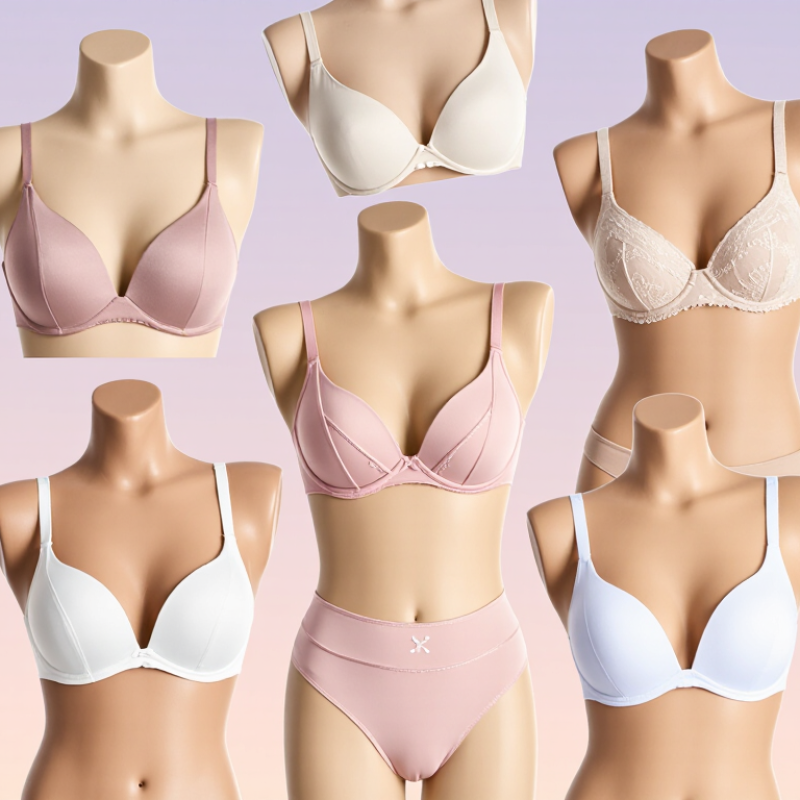
Define Push-Up Bras by Lift Mechanism, Padding, and Coverage
A push-up bra is defined less by how thick its padding looks and more by how its cups guide breast tissue upward and inward. Angled cup seams, a supportive lower cup, or small side slings can create lift without heavy padding. Some styles use underwires for structure; others rely on firm bands and shaped cups. The result depends on fit, not just the label.
Padding changes the feel and silhouette. Graduated foam is thicker near the cup’s base, while removable inserts let you adjust the amount of lift. Light padding can smooth the cup; dense padding may add more volume but feel warm under close-fitting clothes. Try raising your arms and leaning forward. If the cups gape or the band rides up, the size or shape may not suit you. Small details matter.
Coverage also affects both comfort and appearance. Plunge cups work with lower necklines, demi cups expose more of the upper breast, and fuller cups offer more coverage. A low-cut shape may shift during movement, though—not every outfit needs dramatic lift. It’s easy to focus on cleavage and miss pressure at the edges. Comfort is part of the fit.
What Are the Best Push-Up Bras in 2026?
Compare common push-up bra constructions by their typical lift emphasis, padding level, and coverage.
How to read this: Ratings use a relative 1–5 scale, from lower to higher emphasis or coverage. They summarize common design tendencies—not measured performance or ratings of specific products. Fit and construction vary between bras.
Compare 2026 Picks by Support, Materials, Price, and Lift Level
What Are the Best Push Up Bras in 2026?
A useful 2026 comparison starts with support, not cup size alone. A firm band should sit level around your ribs without digging in. For everyday wear, look for wide straps, stable side panels, and cups that stay smooth when you move. Light-support styles feel less structured; stronger support often comes from firmer bands and molded cups. More padding does not automatically mean a better fit. That matters.
Materials and price affect comfort as much as lift. Cotton blends can feel soft, while smooth synthetic fabrics often sit neatly under fitted tops. Lace may look delicate but can show through thin shirts. Budget options can offer reliable everyday support, though their padding or straps may feel less refined. Midrange styles often balance flexibility and shape. Premium prices may buy softer finishes or more adjustability, not necessarily more lift. Low lift creates gentle shaping; medium lift adds visible fullness; high lift usually relies on angled cups and firmer construction.
Tips: Check the band on its loosest hook, then raise your arms and twist gently. Cups should not gape or spill. If the band rides up, try a smaller band size. If the cups wrinkle, consider less padding or a different cup shape. Fit can be annoyingly individual. A mirror check in a thin top helps reveal seams, edges, and unwanted lines.
Find Your Fit with Brand Size Charts and Band-and-Cup Measurements
A push-up bra should lift without forcing breast tissue over the cups or making the band ride up. Measure snugly around your rib cage, then around the fullest part of your bust, keeping the tape level.
For example, a 32-inch underbust and 36-inch bust suggest roughly a 32D in some sizing systems. Treat that as a starting point, not a verdict.
Use each brand’s size chart: cup letters and band scales are not fully interchangeable. ASTM D5585-21 provides women’s body-measurement tables, and ISO 8559-1:2017 standardizes how body dimensions are measured. These standards help explain why careful measurements matter, but they do not guarantee identical bra sizing across labels. Small differences count. Try the bra on the loosest hook; the band should feel firm, while the center gore rests close to your chest.
Check fit while standing and seated. Raise your arms, reach forward, and notice whether the band shifts or the cups wrinkle. A push-up pad can change where tissue sits, so reassess after adjusting the straps. I’d remeasure after body changes, though tape placement is easy to get slightly wrong. If two sizes seem close, compare both rather than forcing the chart to decide.
Assess Comfort and Durability Across Everyday and Occasion Wear
A push-up bra should lift without turning an ordinary day into a series of adjustments. For everyday wear, check whether the band stays level when you raise your arms. Cups should hold the breast tissue without pinching or leaving gaps. A fitting-room check can miss what an eight-hour day reveals. Try sitting, walking, and reaching before deciding.
For occasion wear, a lower neckline or smooth cup may work beneath a particular outfit, but comfort still matters. Wear the bra with the intended top and check for visible edges, slipping straps, or pressure along the ribs. Small details matter. A firm fit can feel supportive at first, then become tiring during a long event.
Durability depends on construction and care, not just how sturdy a bra feels on the hanger. Look for even stitching, secure hooks, and elastic that returns to shape after gentle stretching. Follow the care label, and fasten hooks before washing to reduce snagging. Rotate bras when possible; wearing one repeatedly gives the elastic less time to recover. Still, even well-made fabric can soften sooner than expected. Inspect the band and straps after several washes, especially if the bra no longer sits securely.
Use Market Context: Lingerie Reached $93.08B in 2023 (Grand View Research)
What Are the Best Push Up Bras in 2026?
The lingerie market reached $93.08 billion in 2023, according to Grand View Research. That scale points to substantial consumer demand, but it does not prove that every push-up bra fits well. In 2026, the best choice is less about dramatic lift and more about comfortable, dependable support. Numbers set the scene, not the standard.
Compare cup shape, band stability, and padding before choosing. A well-fitting band should sit level around your body, while the cups should lie smoothly without gaping or spilling. Try raising your arms and sitting down; the bra should stay in place without digging into your ribs. Wider straps can ease pressure, though straps alone should not carry the support. Some designs use angled padding for a subtle lift; others add more volume. More padding is not automatically better. It can feel warm under a close-fitting shirt, and I would not treat a polished product description as proof of all-day comfort.
Tips: Check your fit in a mirror, then move naturally for a minute. If the underwire presses, the cups wrinkle, or the band rides up, try another size or shape. Fit varies between cuts, so the label is only a starting point.
What Are the Best Push Up Bras in 2026?
Market context: The global lingerie market reached USD 93.08 billion in 2023, according to Grand View Research. The comparison below is a brand-neutral guide to common push-up bra constructions—not a ranking of specific products.
| Push-Up Bra Type | Common Construction | Lift and Shape | Neckline Compatibility | Useful Fit Check |
| Graduated-Padding Push-Up | Padding is typically thicker toward the lower or outer part of the cup and thinner toward the top. | Creates lift and can bring the breasts closer together; the result depends on cup shape and fit. | Often suited to lower necklines, including some plunge styles. | Check that the cup edge lies flat and that breast tissue is not spilling over the top or sides. |
| Removable-Pad Push-Up | Uses pockets or openings that allow pads to be inserted or removed. | Lets the wearer adjust padding; removing pads reduces the added volume. | Varies by cup shape; check the neckline of the specific garment. | Make sure pads sit evenly in their pockets and do not fold, shift, or create visible edges. |
| Plunge Push-Up | Has a low center front, often paired with padded cups. | Designed to create lift while keeping the center front low. | Often works with V-neck or plunge necklines, depending on the garment’s cut. | Check that the center gore sits comfortably and that the cups contain breast tissue when leaning forward. |
| Balconette Push-Up | Typically has a lower, more open cup with straps set farther apart than on many full-cup styles. | Offers lift with a more open upper-cup shape. | Can suit wider or square necklines; strap placement and garment cut matter. | Confirm that the upper cup contains the breast without cutting in, especially near the outer edge. |
| Strapless Push-Up | Strapless construction may combine padded cups with a structured band and side support. | Provides lift without shoulder straps; support depends heavily on band fit and construction. | Designed for strapless or off-the-shoulder outfits. | With straps removed, the band should remain level and secure without needing frequent adjustment. |
Selection note: “Best” depends on fit, intended outfit, preferred level of padding, and comfort. Bra sizing and construction can vary between garments, so use the maker’s size guide and check the fit while standing and moving. Market source: Grand View Research, global lingerie market size for 2023 (USD 93.08 billion).