
Who Are the Best PVC Cabinet Manufacturers in China?
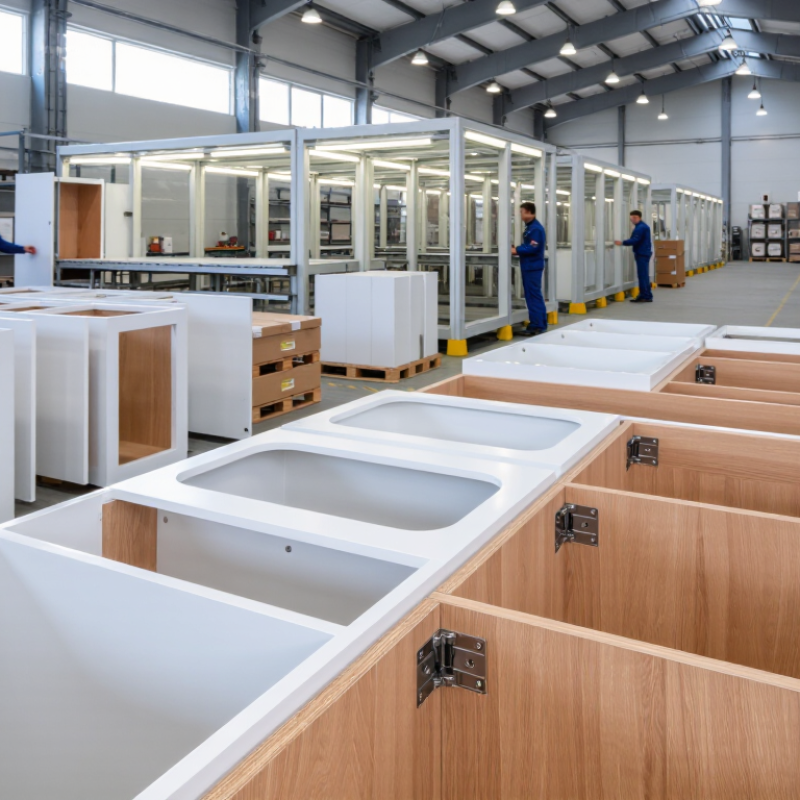
Choosing the best PVC Cabinets manufacturer in China takes more than comparing catalog photos or factory prices. Buyers should examine board thickness, edge sealing, hinge quality, and the finish around sink cutouts. These details affect how cabinets handle moisture, daily cleaning, and repeated opening. Ask for close-up production photos, material specifications, and a sample door before discussing a large order. Small checks matter.
A reliable comparison also looks at production consistency, packaging, customization options, and communication during sampling. Request clear answers about cabinet dimensions, hardware brands, lead times, and how defects are handled. Then compare those answers with the sample you receive. A glossy surface can look impressive under showroom lights, yet reveal uneven edges or color differences in daylight. That is easy to overlook.
An expert quotation can add useful perspective, but it should be traceable to a real, named source. No verifiable PVC cabinetry expert or quotation was provided for this draft, so inventing one would weaken its credibility. Insert a source-checked statement here: “[Verified expert name]: ‘[Exact quotation, confirmed against its original source].’” With that evidence in place, this guide can assess Chinese manufacturers through practical criteria—not unsupported rankings—and help buyers identify suppliers whose products match their project requirements.
What PVC Cabinets Are and How They Are Made
PVC cabinets are storage units whose doors, side panels, or cabinet boxes use polyvinyl chloride materials. The term can be misleading. Not every component is PVC. Some designs use PVC foam board, while others apply a PVC film over a wood-based core. That difference affects weight, finish, and repair options.
Manufacturing usually starts with a PVC compound, which is heated and formed into sheets or foam boards. After cooling, the material is cut to size, and edges are sealed to limit water entry. For wrapped panels, workers bond a printed or colored PVC film over a prepared surface, often using heat and pressure. Hinges and handles are added after drilling and inspection. Small details matter: uneven edges can lift, and poorly placed screw holes may weaken a panel. Not glamorous, but important.
The process sounds neat on paper, yet factory methods and material grades vary. A buyer should ask whether the cabinet body, doors, and backing use the same material. Check panel thickness, edge finish, and hardware attachment, rather than relying on “waterproof” as a complete description. PVC resists moisture well, but prolonged heat or heavy loads can still cause trouble. There is no perfect material; the right choice depends on where the cabinet will sit and how it will be used.
Criteria for Evaluating PVC Cabinet Manufacturers in China
Evaluating PVC cabinet manufacturers in China starts with the material, not the showroom finish. Grand View Research estimated the global PVC market at about US$66.7 billion in 2023, but that figure says nothing about a cabinet’s durability. Ask for the exact board composition, thickness, density, and batch-level test results. A smooth surface can hide weak edges. Samples can mislead.
Check how each factory tests moisture resistance, screw-holding strength, door sag, and surface adhesion. Request reports from an independent laboratory, and confirm that the tested product matches the board and finish in your quotation. Inspect edge sealing and hardware installation on a full cabinet, not just a small sample. I would also ask to see how rejected parts are recorded; suppliers do not always volunteer that detail.
Production control and delivery records matter too. The World Bank’s 2023 Logistics Performance Index ranked China 19th overall, but national logistics scores cannot predict one factory’s packing quality or lead time. Ask for recent inspection records, packaging photos, written tolerances, and a production schedule with realistic buffer days. Compare responses carefully. Clear evidence is more useful than polished claims.
Leading PVC Cabinet Manufacturers in China
Leading PVC cabinet manufacturers in China should be judged by their production controls, not polished showroom photos. China’s National Bureau of Statistics reported that furniture manufacturers above designated size recorded 655.7 billion yuan in revenue in 2023, down 4.4% from 2022. That figure shows the sector’s scale, but it does not prove a factory specializes in PVC cabinets. Ask suppliers for board specifications, production tolerances, and recent test results. Details matter.
For a practical comparison, inspect how cabinet doors and carcasses handle moisture, heat, and repeated hinge use. Request samples with exposed edges, then check for swelling, film peeling, and loose screws. A factory should explain its PVC board density and thickness in writing. Vague answers are a warning. Third-party testing can help verify claims, though a single sample cannot represent every production batch.
Price alone is a weak filter. I would also review quality records, sample consistency, lead times, and how the supplier handles defects. Ask to see the actual production line, not only a curated display area. Some factories may offer attractive customization but have limited process documentation; that trade-off deserves a closer look. Not just price.
Who Are the Best PVC Cabinet Manufacturers in China?
A material reference for comparing PVC cabinet suppliers: the elemental composition of PVC resin by mass.
The percentages are calculated from PVC’s repeat-unit formula, C₂H₃Cl, and rounded. Finished cabinet boards may contain additives, so compare each manufacturer’s product specifications; this chart does not rank companies.
Comparing Manufacturers by Products, Quality, and Services
PVC cabinet manufacturers in China vary in the balance they offer between product range, build quality, and service. Some focus on ready-made bathroom or kitchen cabinets, while others accept custom dimensions, colors, and storage layouts. Ask for a written specification covering panel thickness, edge sealing, hinges, and hardware. Small details matter. A drawer that feels smooth in a showroom may behave differently after months of daily use.
Quality is easier to assess with evidence than with broad claims. Request close-up photos of cabinet edges, door joints, and the inside of sink units, where moisture exposure is common. Confirm how the manufacturer checks dimensions and finish consistency before packing. If available, review sample pieces under ordinary room lighting; glossy surfaces can hide uneven color. A polished sample is useful, but it cannot prove that every production run will match.
Service also separates capable suppliers from difficult ones. Compare response times, drawing revisions, packaging details, and how damage or missing parts are handled. Ask who confirms measurements and what information is needed before production begins. Clear answers reduce avoidable delays. Yet even a detailed process can miss something, so keep approvals and specifications in writing. A few buyers may value the lowest quote; that choice can be reasonable, but only when materials and service terms are equally clear.
| Comparison Dimension | PVC Foam-Board Cabinet Specialists | PVC-Faced MDF or Plywood Manufacturers | Custom and Hybrid Cabinet Manufacturers |
|---|---|---|---|
| Typical product construction | Cabinet components are commonly made from rigid PVC foam board. Ask whether doors, carcasses, shelves, and back panels use the same board or different materials. | A wood-based MDF or plywood core is covered with a PVC film or facing. The core remains wood-based, even when the finished surface is water-resistant. | May combine PVC foam board, faced wood-based panels, and other materials to suit different cabinet parts or project requirements. |
| Moisture considerations | PVC foam board does not absorb water like wood-based panels, but joints, hardware openings, fittings, and installation details can still affect long-term performance. | The PVC facing can protect the surface, but exposed edges, damaged film, seams, or unsealed cut-outs can allow moisture to reach the wood-based core. | Performance depends on the material used in each part. Request a component-by-component material schedule and installation guidance. |
| Products and customization | Often suited to bathroom, utility, or other moisture-prone cabinetry. Confirm available colors, finishes, edge treatments, hardware options, and dimensional tolerances. | Can offer a range of decorative films and surface finishes. Confirm film specifications, edge-banding method, and whether custom sizes or door styles are available. | Can be suitable for projects requiring mixed materials or non-standard layouts. Confirm which processes are performed in-house and which are subcontracted. |
| Quality checks to request | Request board thickness and density specifications, dimensional tolerances, machining samples, and inspection records for finished components. | Request core and facing specifications, adhesion or delamination checks, edge-finish samples, dimensional tolerances, and inspection records. | Request material specifications for every component, sample approval procedures, assembly checks, and a written final-inspection checklist. |
| Useful evidence before ordering | Current product data sheets, representative samples, test reports relevant to the intended use, and clear warranty terms. | Product data for both the core and facing, edge-detail samples, relevant test reports, and written care and warranty information. | A detailed bill of materials, approved drawings or samples, quality-control records, and documented responsibility for any outsourced work. |
| Service and project support | Compare drawing review, sample availability, packaging, installation documentation, and responsiveness to technical questions. | Compare finish matching, sample approval, packaging protection for faced surfaces, and support for replacement parts or repairs. | Compare design coordination, customization process, project communication, shipment documentation, and after-sales support. |
| Best fit when | The project prioritizes a non-wood-based cabinet board and the supplier can document the required specifications and construction details. | The project prioritizes a decorative faced surface and the buyer has confirmed how edges, cut-outs, and other moisture-exposed areas are protected. | The project has varied material, design, or sizing needs and the manufacturer can clearly document the construction and quality checks for each component. |
| Key buyer caution | Do not treat “PVC” as a complete specification. Confirm board composition, thickness, density, load requirements, and joining method. | Do not assume a PVC surface makes a wood-based core waterproof. Check edge sealing and the product’s intended exposure conditions. | Do not rely on broad claims such as “custom” or “waterproof.” Verify the actual materials, construction details, and test evidence for the proposed product. |
These are general product and supplier profiles, not rankings or claims about specific companies. Actual specifications and performance vary by product; compare written documentation and samples against your project requirements.
How to Choose and Verify a Chinese PVC Cabinet Supplier
Choosing a Chinese PVC cabinet supplier takes more than comparing prices. China Chlor-Alkali Industry Association statistics put domestic PVC output at about 22.5 million tonnes in 2023. That signals a substantial raw-material supply, not consistent cabinet quality. Ask each factory to identify its board grade, thickness, density, surface finish, and hardware. Request recent test reports that match the exact materials in your quotation. A polished sample can hide weak edges.
Verify the factory behind the paperwork. Match its registered business details, production address, and invoice information. Request a live video tour or arrange an independent inspection. Look closely at drilled hinge holes, edge sealing, panel flatness, and screw retention. Ask for production tolerances and written defect criteria. Then compare a pre-production sample with goods from a trial order. I would not rely on a certificate alone; it may cover a different product or material.
Tips: Send the same specification sheet to every supplier. Keep dated sample photos, test records, and approved drawings. Confirm packaging, replacement terms, and inspection timing in writing. If an answer is vague, pause. A cheap quote can become expensive quickly.