
China Top 10 Door Stopper Manufacturers for Global Buyers
A Door Stopper may be a small fitting, but buyers depend on it to protect walls, control door movement, and withstand daily use. The sourcing decision involves more than price. Material, fixing method, finish, packaging, and consistent dimensions all matter. A loose screw or chipped coating can turn a minor component into a costly complaint.
Industry data offers useful context, though it does not measure door-stopper sales directly. The 2023 Global Status Report for Buildings and Construction, published by the Global Alliance for Buildings and Construction and UNEP, estimates that buildings and construction account for 34% of global energy demand and 37% of energy- and process-related carbon dioxide emissions. The UN’s World Urbanization Prospects projects that about 68% of the world’s population will live in urban areas by 2050. These figures point to continued building and renovation needs. The connection to door-stopper demand is indirect, and should not be overstated.
This guide reviews ten Chinese manufacturers for global buyers, focusing on practical sourcing questions: product range, materials, customization, quality controls, and export support. A stainless-steel floor stop, for example, may suit a busy commercial entrance, while a rubber wall-mounted model can be simpler for a home interior. Details matter. Manufacturer claims still need verification through samples, specifications, and clear inspection criteria. No ranking can replace that work. The right supplier depends on the project, and sometimes the first sample disappoints. That is worth admitting.
China’s Door Stopper Industry: Products, Materials, and Capabilities
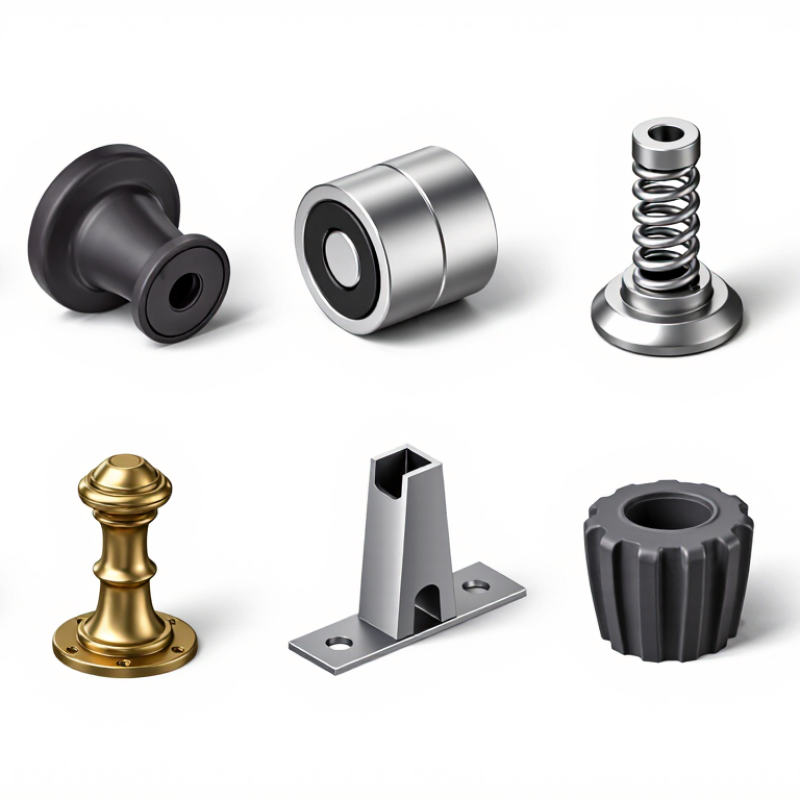
China’s door stopper industry covers simple rubber wedges, wall-mounted stops, floor-mounted models, and concealed magnetic designs. Buyers can compare products by installation method, impact absorption, finish, and replacement options. Many factories offer both standard sizes and customized dimensions. A few millimeters can affect how a door sits against a wall.
Materials shape performance. Stainless steel and zinc alloy provide a firm outer structure, while rubber or silicone contact points help reduce noise and protect surfaces. Plastic models can be lightweight and economical, but durability depends on the resin and design. Ask for material specifications, finish details, and test samples. A polished surface alone proves little.
Manufacturing capabilities often include stamping, die casting, machining, polishing, plating, and assembly. Some suppliers can adjust colors, mounting plates, packaging, or spring tension for specific projects. Check hole spacing and screw compatibility against the intended door and floor. Small details matter. Catalogs may not show how a stopper behaves after repeated impact, so sample testing is worthwhile. I would also confirm how replacement pads are supplied; this detail is easy to overlook.
China’s Door Stopper Industry: Typical Material Densities
Door stoppers commonly use metals for strength and rubber for cushioning. This chart compares typical material densities, not market shares or manufacturer-specific product data.
Density values are approximate in g/cm³; actual values vary by alloy grade and rubber formulation.
The Top 10 Manufacturers: Product and Production Profiles
A useful comparison of ten door stopper manufacturers should begin with product design and factory capability. Profiles may include makers of floor-mounted stops, wall-mounted buffers, magnetic holders, and concealed models. Materials range from zinc alloy and stainless steel to rubber and thermoplastic. Buyers should check base thickness, fixing method, replaceable contact pads, and finish consistency. Small parts matter.
Production methods reveal important differences. A supplier using die casting may offer complex shapes, while CNC machining suits tighter dimensional control. Rubber molding affects cushioning and noise, but material hardness is not always stated clearly. Ask for drawings, sample parts, finish specifications, and inspection records. Then compare tooling options, order minimums, lead times, and packaging protection. A polished sample can still hide uneven batch quality.
Demand should be read in context, not treated as door-stopper sales data. Global Construction Perspectives and Oxford Economics projected worldwide construction output to reach 15.5 trillion U.S. dollars by 2030 in their Global Construction 2030 report. The World Green Building Council’s 2019 Bringing Embodied Carbon Upfront report attributed about 11% of global energy-related carbon emissions to building materials and construction. These figures support careful sourcing and durable product choices, but they do not rank individual suppliers. One comparison blind spot remains: factory claims need independent verification.
How Manufacturers Differ in Quality, Customization, and Certifications
China’s top door stopper manufacturers may offer similar catalog designs, but product quality becomes clear in the details. Check the body material, spring action, and mounting hardware. A stopper should hold a door firmly without scratching the floor or loosening after repeated use. Ask for sample units and test them on the actual door and flooring. Small differences matter.
Customization can include dimensions, finishes, rubber tips, screw placement, and retail packaging. Share drawings and installation requirements before production, then confirm them against a pre-production sample. A brushed finish may look consistent in a photograph but vary under warm showroom lighting. No supplier is perfect. Clear limits on color matching and acceptable tolerances prevent awkward surprises.
Certifications and test records also vary. Ask which quality-management certificates are current, who issued them, and whether they cover the relevant factory. For product claims, request dated reports showing the tested model, methods, and results. A certificate alone does not prove every batch is identical. Compare inspection records, defect handling, and sample performance alongside price and lead time; paperwork deserves a careful read.
China Top 10 Door Stopper Manufacturers for Global Buyers - How Manufacturers Differ in Quality, Customization, and Certifications
Buyer comparison framework: This table lists ten verifiable comparison points, not a ranking of named manufacturers. Supplier-specific capabilities, certifications, prices, and lead times should be confirmed directly with each factory and supported by current documentation.
| No. | Comparison dimension | Evidence to request from each manufacturer | How buyers can compare suppliers |
|---|---|---|---|
| 1 | Product range and construction | Product catalogue or drawings covering the offered types, such as floor-mounted, wall-mounted, magnetic, hinge-pin, and portable door stops. | Compare the actual designs, installation methods, dimensions, and intended applications. Confirm that the supplier manufactures the required type rather than only trading it. |
| 2 | Materials and finish | Bill of materials identifying the relevant metal, plastic, rubber, or other components; finish specifications; and, where applicable, material or coating test reports. | Compare material and finish against the product specification and end-use environment. Do not treat a finish name alone as proof of corrosion resistance or material grade. |
| 3 | Dimensional quality | Dimensioned drawings, stated tolerances, inspection records, and sample measurements for critical parts and assembled products. | Check that samples and production inspection criteria match the approved drawing. Request the measurement method and acceptance limits for critical dimensions. |
| 4 | Functional and durability testing | Test procedures and reports relevant to the design, such as operating-cycle, retention, impact, or load testing. Reports should identify the test conditions and sample details. | Compare results only when test methods, conditions, and acceptance criteria are comparable. There is no single universal durability rating for every door stopper design. |
| 5 | Customization capability | Examples of available changes to dimensions, materials, finishes, magnets, rubber components, packaging, or product markings, plus the approval process for revised drawings. | Confirm which changes are technically available, which require new tooling, and whether the supplier will provide and approve a pre-production sample. |
| 6 | Tooling and sample control | Tooling quotations and ownership terms, sample lead-time estimates, revision records, and the process for approving production samples. | Clarify tooling cost, ownership, maintenance, and transfer terms in writing. Check that the approved sample and drawing are identified in the purchase documentation. |
| 7 | Quality management | A current ISO 9001 certificate, if claimed, including the certificate scope, issuing certification body, validity dates, and site address; also request the factory’s inspection and nonconformance procedures. | ISO 9001 is a quality-management-system standard, not a product-performance certification. Verify the certificate with its issuer and check that the relevant manufacturing site and activities are covered. |
| 8 | Regulatory and market documentation | Declarations, test reports, or other documents applicable to the exact product and destination market. Ask the supplier to identify the legislation or standard each document addresses. | Check applicability rather than relying on a generic logo or certificate. CE marking applies when a product falls within applicable EU legislation; it is not a universal requirement for ordinary door stoppers. RoHS scope should also be assessed for the specific product. |
| 9 | Production capacity and delivery | Written quotations for minimum order quantity, sample and production lead times, packaging, and shipment terms for the requested specification and order quantity. | Compare quotations on the same product specification, quantity, packaging, and delivery terms. Lead times and minimum order quantities vary by supplier and order conditions. |
| 10 | Traceability and after-sales support | Batch or lot identification method, retained inspection records, complaint-handling process, and written terms for replacements or corrective action. | Confirm how a production batch can be traced to inspection records and how quality issues are handled. Record agreed remedies and response expectations in the purchase contract. |
Key Factors for Comparing Suppliers as a Global Buyer
When comparing door stopper suppliers in China, look beyond catalogue photos. A neat finish does not show how a product performs after months of daily use. Ask for samples in the exact material, finish, and mounting style you plan to order. Check whether the base sits flat, the rubber tip grips tile, and the screw holes align without forcing. Small details matter.
Request measurable specifications, including dimensions, material grade, coating thickness, and tested load or durability results. Ask how tests were conducted and whether records apply to the same model. A supplier’s response can reveal how closely its team understands production. Ask again if an answer stays vague. I have seen buyers focus on unit price, then discover that packaging, tooling, or replacement parts change the real cost.
Compare minimum order quantities, sample fees, production lead times, and payment terms in writing. Clarify how defects are handled, and request photos of carton protection and labeling before shipment. For overseas sales, check that any claimed quality documents match the factory, product, and intended market; do not rely on a logo or certificate image alone. Communication deserves a practical test, too: send a drawing with one unusual dimension and see whether the supplier flags it. A fast reply is useful, but an accurate question may be more valuable. No comparison table can capture every production surprise.
Steps for Evaluating and Sourcing from Chinese Manufacturers
China Top 10 Door Stopper Manufacturers for Global Buyers
Steps for Evaluating and Sourcing from Chinese Manufacturers
Start with a clear product brief. Specify the door stopper type, dimensions, base material, finish, mounting method, and expected use. A rubber wedge for a light interior door has different needs from a metal floor-mounted stop. Share drawings and request written confirmation of key measurements. Small details matter. Ask how the supplier checks dimensions, surface quality, and attachment strength during production. Review sample photos, but inspect a physical sample before placing a large order. A smooth finish alone proves little.
Tips: Compare at least three suppliers using the same specifications. Check sample consistency, packaging, lead time, and response quality. Ask for relevant quality records, and clarify who handles inspection and freight costs. Keep changes in writing.
Assess production capacity with practical questions. Can the factory meet your quantity and delivery window? What happens if a component fails inspection? Request a sample made with the intended materials and finish, then test it on a representative door and floor surface. Record any slipping, scratching, or loose fittings. One good sample is not proof of consistent production; that assumption is easy to make, and worth questioning. Confirm payment milestones, carton dimensions, and labeling before production starts. Clear communication helps, though it cannot replace independent checks. After the first shipment, compare delivered units with the approved sample and note any differences for the next order.