Why Choose a Round Trampoline for Your Backyard?
A Round Trampoline can be a practical fit for a family backyard, especially when the available space is open and fairly symmetrical. Its circular shape gives the jumping surface a clear center, which may help guide casual bouncing inward. But shape alone does not control where someone lands. That depends on jumping habits, age, coordination, and supervision. Looks can mislead.
For many households, the appeal is simple: one central jumping area, a familiar design, and a footprint that can be easier to plan around than some rectangular models. Before choosing one, measure the trampoline’s full frame, not just the mat. Leave the clearance recommended by its manufacturer, and check for overhead branches, fences, paving, and nearby play equipment. Space is not optional. A well-sized trampoline can still feel cramped if it sits beside a garden wall or under low branches.
The right choice also depends on construction and upkeep. Compare the frame, springs or alternative tension system, mat, and enclosure, then review the product’s weight limits and assembly instructions. Check these parts regularly for wear, loose fittings, and damage. A safety enclosure may reduce the chance of falling off, but it cannot remove every risk or replace active adult supervision. Still, I would not treat a round shape as a safety feature on its own. It is one useful design consideration, not a guarantee. This guide explores what makes round models appealing, where they may be less suitable, and which details deserve a closer look before you buy.
What Defines a Round Trampoline?
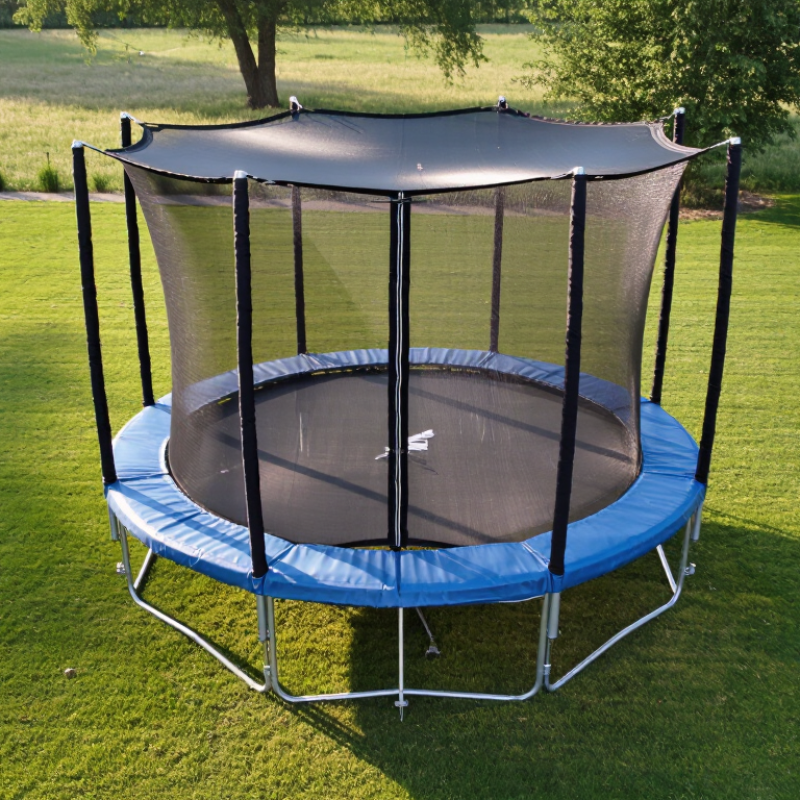
A round trampoline is defined by its circular frame and jumping mat, with springs or elastic bands connecting the mat to the frame. The evenly spaced attachment points create a continuous perimeter rather than separate jumping zones. As the mat stretches and rebounds, its movement is shaped by the jumper’s weight, position, and the tension of the suspension system. That shape matters.
In a typical backyard, the circular footprint can fit neatly into an open patch of lawn, though the frame still needs clear space around it. Many models include a net enclosure, but that is a separate component, not what makes the trampoline round. The mat’s diameter describes the jumping surface; the full frame takes up more room. Measure both before choosing a spot. A round design may encourage movement toward the middle, but it cannot keep every jump centered. That part is less predictable than it looks. Spring condition, mat tension, and the number of users can all affect how the surface responds, so inspect the equipment regularly and follow its stated use limits.
Why Choose a Round Trampoline for Your Backyard?
What Defines a Round Trampoline?
A round trampoline has a circular frame and a jumping area arranged around a central point. This chart compares the approximate geometric footprint of common diameters. Larger diameters provide more total circular area, though the usable jumping mat is smaller because of the frame and padding.
Footprint values are calculated from the diameter using the circle-area formula: π × (diameter ÷ 2)². They are geometric estimates, not measurements of usable jumping-mat area.
How Its Shape Influences Bounce and Movement
A round trampoline’s shape can influence where a jumper travels after landing. Its springs pull the mat outward from a circular frame, and their tension often encourages movement back toward the center. This can make bouncing feel more contained than on some rectangular models. It is not a guarantee, though. A hard landing near the edge may still send someone sideways, and worn springs can change the feel. The mat, spring condition, and jumper’s weight all matter.
Tips: Keep one person jumping at a time. Begin near the center with small, controlled bounces. Check the mat and springs regularly for wear, and keep the surrounding area clear.
In practice, the center can feel like a natural target, especially for children learning to control their movement. That sounds tidy, but real bouncing is less predictable; a tired jumper may drift or land off balance. A round shape may suit casual play, yet it does not replace supervision or safe habits. Watch how the trampoline responds under normal use, and stop if the mat feels uneven or a spring looks loose.
Safety Features for Backyard Use
Why Choose a Round Trampoline for Your Backyard?
Safety Features for Backyard Use
A round trampoline can fit neatly into many backyards, but its safety features deserve close attention. A sturdy enclosure net helps reduce falls, while thick padding should cover the springs and frame. Check that the net closes securely and has no gaps near the jumping surface. Look for firm stitching and padding that stays in place when pressed. Small details matter. Place the trampoline on level ground, away from fences, trees, and hard edges. Leave clear space around it, too.
Before each use, check the frame, mat, springs, and net for wear or loose parts. A quick look can catch fraying fabric or a shifted pad. Follow the manufacturer’s setup instructions and weight limits; anchoring the frame may help in windy conditions. One jumper at a time is a sensible rule, even when children want to bounce together. Adult supervision still matters. An enclosure can reduce some risks, but it cannot prevent every collision or awkward landing. It is easy to assume a net makes the setup completely safe. It does not.
Space and Placement Requirements
A round trampoline needs more room than its advertised diameter suggests. Measure the frame, legs, and any safety enclosure, then add clear space around the entire unit. Measure twice. CPSC guidance advises placing trampolines away from buildings, trees, and other play areas. Check overhead branches and wires, too; they can be easy to overlook when the lawn looks open. Choose firm, level ground, and keep the route to the trampoline free of stones, hoses, and garden tools. Not just the mat.
A practical layout starts with a tape measure and a walk around the yard. Mark the trampoline’s footprint with garden stakes, then inspect gates, fences, windows, and nearby play equipment. Leave the clearance specified in the assembly and safety instructions; do not assume a round frame can squeeze into a narrow corner. The American Academy of Pediatrics, citing U.S. CPSC emergency-department data, reported about 98,000 trampoline-related injuries in 2009. That figure is historical, not a current annual estimate, but it underscores why placement deserves care. A sloped lawn may look usable, yet leveling the site can be harder than expected. I would recheck the space after assembly, when the actual legs and enclosure reveal what the sketch missed.
Choosing the Right Size and Setup
Why Choose a Round Trampoline for Your Backyard?
Choosing the Right Size and Setup
A round trampoline can suit a backyard with a clear, open area. Its shape is easy to position, but the frame still needs generous space around it. Measure the full jumping surface and surrounding clearance before buying. Check the setup instructions for required distances from fences, walls, trees, and other obstacles. Look up, too. A low branch can be easy to miss when measuring from the ground.
Tips: Match the trampoline size to your yard, not just the number of people in your household. Leave room for the enclosure and access point. Choose a flat, stable spot, and follow the manufacturer’s anchoring guidance. For safer use, allow one jumper at a time and supervise children.
Setup takes more thought than it seems. Check that the ground is level, then inspect the frame, springs, mat, and net before use. A soft-looking lawn does not remove the need for clear space. I once underestimated how much room an enclosure would take; measuring again saved a cramped corner, though it was an annoying extra step. Recheck the area after moving garden furniture or letting plants grow.
Why Choose a Round Trampoline for Your Backyard? — Choosing the Right Size and Setup | Nominal Frame Diameter | Approx. Diameter | Approx. Site Width With 6 ft (1.8 m) Clearance on Each Side | Best Suited For | Setup and Safety Considerations |
| 8 ft | 2.4 m | 20 ft (6.1 m) | Compact yards and younger children, when the product’s age and weight limits are appropriate. | Measure the frame and enclosure before choosing a location; usable jumping space is smaller than the frame diameter. |
| 10 ft | 3.0 m | 22 ft (6.7 m) | Small-to-medium yards with room for an adult to supervise nearby. | Place on a level surface and keep away from fences, trees, walls, sheds, and other obstacles. |
| 12 ft | 3.7 m | 24 ft (7.3 m) | Many family backyards where a larger jumping area is preferred. | Check overhead space as well as ground clearance. Follow the specific manual’s clearance and anchoring instructions. |
| 14 ft | 4.3 m | 26 ft (7.9 m) | Larger yards with ample open space around the equipment. | Allow enough room for the frame, enclosure poles, ladder, and safe access; secure the trampoline as directed for local wind conditions. |
| Round design | — | Depends on the selected diameter | Backyards where a centered layout and evenly distributed jumping surface suit the available space. | A round shape does not remove the need for a clear safety zone. Use the trampoline on level ground, install its enclosure correctly, and permit only one jumper at a time. |
| Planning note: Site widths above are illustrative calculations using 6 ft (1.8 m) of clearance on every side; they are not a universal safety standard. Actual clearance, overhead-space, age, and weight requirements vary by product and location. Always follow the manufacturer’s instructions and applicable local guidance. |