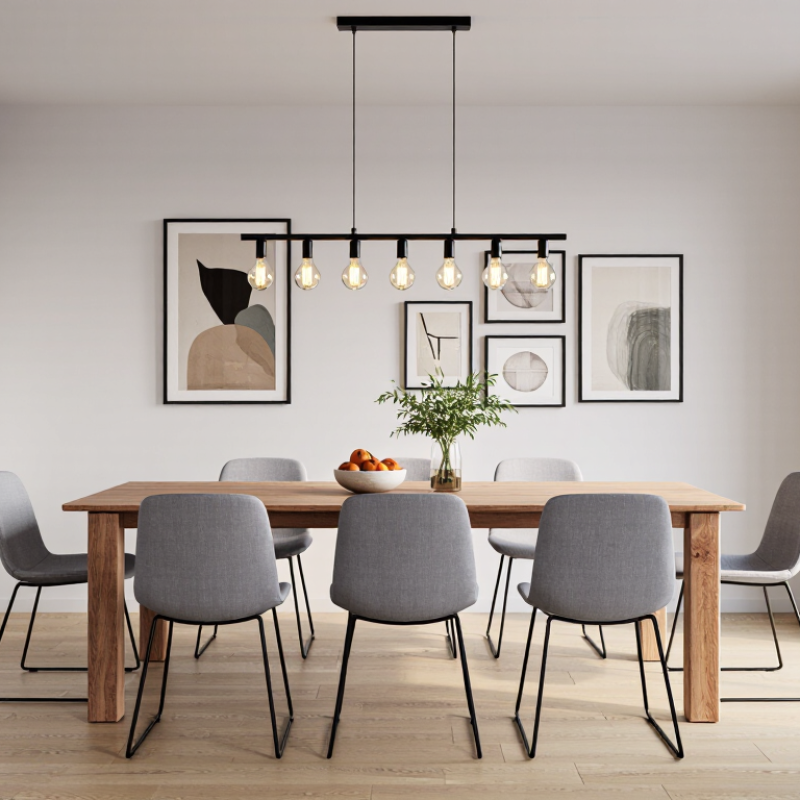
How to Choose the Right Home Dining Table?
Choosing the right home dining table begins with how your household actually lives. A beautiful table may fail if it blocks a walkway or crowds every chair. Measure the room, not just the empty floor. Leave about 36 inches between the table edge and nearby walls or furniture. This space allows people to pull out chairs comfortably.
Consider your daily routines before choosing a shape or material. A rectangular table suits larger rooms and regular family meals. Round or oval designs can improve movement in compact spaces. Solid wood offers warmth, repairability, and long-term character. Veneer may provide a similar appearance with a lighter price and easier handling. Glass can make a small room feel open, but fingerprints appear quickly. They really do.
Table height matters, too. Most dining tables stand near 28 to 30 inches high. Pair the table with chairs that support relaxed knees and level elbows. Check the seat height, armrests, and clearance beneath the tabletop. A trusted retailer should provide exact dimensions, material details, care instructions, and a clear warranty. Independent furniture guidance and recognized safety standards can also support a more informed choice.
Personal experience often reveals what product descriptions hide. Sharp corners may trouble young children. A delicate finish may disappoint during busy dinners. I once prioritized style over cleaning needs, and regretted it. Your best choice may not be the most fashionable one. It should fit your room, habits, budget, and plans for the next several years. The ideal home dining table feels stable, practical, and naturally easy to use.
Define Your Dining Needs and Daily Use
How to Choose the Right Home Dining Table?
Define Your Dining Needs and Daily Use
A dining table should fit your real routines, not an imagined lifestyle. Count the people who eat there most evenings. Then consider guests, homework, remote work, and weekend projects. A household of four may need a six-seat table for comfortable movement. Measure the room carefully, leaving about 90 centimeters around the table for chairs and walking paths. I once underestimated this space, and every chair felt trapped against the wall. That small mistake made daily meals frustrating.
Tips: Observe your dining area for one week. Note who uses it, when, and for what. Measure plates, serving dishes, and storage needs. Choose a surface that cleans easily if children eat there. Rounded corners can improve comfort in tighter rooms.
Think about your daily habits before choosing shape and material. A rectangular table suits long rooms and larger gatherings. A round table encourages conversation and may improve circulation. If you often serve hot dishes, choose a stable, heat-resistant surface and use protective mats. For frequent cleaning, avoid finishes that show every mark. Your first choice may not be perfect. Needs can change, so an extendable design might offer practical flexibility without overwhelming the room. Reliability comes from checking dimensions, construction quality, and care requirements before purchase.
How to Choose the Right Home Dining Table? - Define Your Dining Needs and Daily Use
| Decision Factor | Typical Daily Need | Recommended Table Specification | Practical Reason | Key Measurement or Tip |
|---|---|---|---|---|
| Regular Seating | Two people | Compact rectangular or round table | Provides enough space for daily meals without taking over a small room. | Length: 90–120 cm; round diameter: 80–100 cm |
| Regular Seating | Four people | Four-seat rectangular, square, or round table | A practical choice for small families, couples, or apartments. | Rectangular: 120–140 cm long; round: 100–120 cm diameter |
| Regular Seating | Six people | Medium rectangular or oval table | Offers comfortable everyday seating and occasional space for guests. | Length: 160–180 cm; width: 85–100 cm |
| Regular Seating | Eight people | Large rectangular, oval, or extendable table | Suitable for larger households and frequent shared meals. | Length: 200–240 cm; width: 90–105 cm |
| Room Size | Small dining area or open-plan apartment | Round, square, drop-leaf, or extendable design | Rounded corners improve movement, while folding or extending features save space. | Allow at least 90 cm between the table edge and nearby walls or furniture |
| Room Size | Dedicated dining room | Fixed rectangular or oval table | A larger fixed table can become the visual and functional centerpiece of the room. | Allow 100–120 cm around active chair areas for easier movement |
| Daily Activities | Meals only | Standard-height table with a durable, easy-clean surface | Prioritizes comfortable dining and simple maintenance. | Standard table height: approximately 74–76 cm |
| Daily Activities | Dining, homework, or remote work | Sturdy table with generous legroom and a wider top | A stable surface and sufficient depth support multiple activities. | Table depth: about 90–100 cm; keep at least 60 cm width per user |
| Daily Activities | Serving family-style meals | Rectangular or oval table with a wider tabletop | The extra central surface leaves room for serving dishes while maintaining personal space. | Provide approximately 60 cm of table length per seated person |
| Hosting Frequency | Guests once or twice a year | Compact fixed table with removable or foldable extensions | Preserves everyday floor space while adding capacity when needed. | An extension of 40–60 cm commonly adds two seating positions |
| Hosting Frequency | Guests several times a month | Extendable rectangular or oval table | Balances normal daily use with regular entertaining. | Check that the extended table still leaves at least 90 cm of circulation space |
| Shape | Need efficient seating in a narrow room | Rectangular or oval table | These shapes use room length efficiently and can accommodate more seats along the sides. | Keep the table width near 85–100 cm for comfortable reach across the surface |
| Shape | Need easier conversation among all diners | Round or oval table | Curved edges improve sightlines and reduce visual barriers between people. | Round tables generally need more floor area as seating capacity increases |
| Material | Heavy everyday use | Sealed solid wood, engineered wood, laminate, or durable composite surface | These finishes are easier to clean and better suited to repeated contact with food and drinks. | Use coasters, placemats, and prompt spill cleanup to protect the finish |
| Safety | Homes with young children | Rounded corners, stable legs, and a non-toxic, easy-clean finish | Reduces sharp contact points and helps manage frequent spills. | Avoid unstable pedestal designs and sharp projecting hardware |
| Chair Compatibility | Using chairs with arms | Table with sufficient underside clearance | Armrests need additional vertical and horizontal space to slide under the tabletop. | Check at least 68–72 cm of clear height beneath the apron or tabletop |
| Long-Term Flexibility | Changing household needs | Extendable table with a durable mechanism | Adapts to moving, family growth, and changing entertaining habits. | Test the extension mechanism and confirm that added leaves store securely |
Measure the Room and Plan Comfortable Clearances
How to Choose the Right Home Dining Table?
Measure the Room and Plan Comfortable Clearances
Measure the room before falling in love with a table. Record doors, radiators, windows, and floor vents. A dining table needs more than its top dimensions. Each chair also needs space to move, pull out, and turn.
The National Kitchen & Bath Association’s planning guidelines identify 36 inches as a minimum walkway. They recommend wider passages where people work or pass behind someone. For dining areas, 36 inches from the table edge to a wall is a practical starting point. Allow about 42 to 48 inches near busy routes. These figures are planning references, not rigid laws. Your household may need more.
Try this simple test. Mark the proposed tabletop with painter’s tape. Add a chair footprint at each setting. Pull every chair back fully. Then walk behind it with a serving dish. If your hip touches the chair, the room is already negotiating with you. A 60-inch round table can feel generous, yet four chairs may consume nearly the entire room. Rectangular tables often suit narrow rooms better, but corners can interrupt movement.
I still make this mistake: measuring the empty room, not the lived room. Open a cabinet. Extend a drawer. Let two people pass. The table should support conversation, not create a daily obstacle. Check the NKBA guideline against your actual routines, especially if children, older adults, or mobility aids use the space. Comfortable clearance is personal. Data helps, but your evening habits decide.
Choose the Best Table Shape and Size
Choosing the right home dining table starts with the room’s shape and daily habits. Measure the dining area before shopping, including door swings and walking paths. Leave about 36 inches between the table edge and nearby walls or furniture. This space allows chairs to move comfortably. A rectangular table suits long rooms and often seats more guests. A round table works well in compact spaces because it removes sharp corners. It also encourages easier conversation.
Table size matters more than appearance. Allow roughly 24 inches of table width per person for comfortable dining. A 60-inch rectangular table usually seats six people, while a 48-inch round table may suit four adults. Check the table height, too. Most dining tables stand near 28 to 30 inches high. Chair arms must slide underneath without scraping. Small details matter.
Tips: Draw the table dimensions on the floor with masking tape. Walk around it with a full chair pulled out. Test this at different meal times, not only in an empty room. I once chose a table that looked perfect but blocked a cabinet door. That mistake changed my measuring routine. If children use the space, rounded corners may be safer and easier to navigate. An extendable design can help during gatherings, but confirm that extra leaves have secure storage. A beautiful table is not truly practical if everyday movement feels crowded.
How to Choose the Right Home Dining Table?
Recommended table dimensions by seating capacity
As a practical planning rule, allow about 24 inches of table edge per diner. Rectangular and oval tables are efficient for larger groups, while round tables encourage conversation and work well in compact or square rooms. These approximate minimum dimensions are shown in inches; always leave at least 36 inches of clearance around the table for comfortable movement.
Compare Materials, Construction, and Maintenance
Choosing a home dining table requires more than matching its color to your room. Material affects durability, comfort, and daily care. Solid wood can be repaired and refinished, but it expands with humidity. The USDA Forest Products Laboratory’s Wood Handbook reports that indoor wood commonly reaches 6–8% moisture content. Seasonal movement is normal, not necessarily a defect. Veneer over engineered wood offers better dimensional stability, although damaged edges can be difficult to repair. Stone resists heat and scratches, yet it adds considerable weight. Glass keeps a small room visually open, but fingerprints appear quickly.
Construction deserves close inspection. Sit at each corner and apply gentle pressure. A stable table should not wobble or twist. Look for tight mortise-and-tenon joints, reinforced corner blocks, and a strong apron beneath the top. Extension tables need smooth, aligned hardware. In my furniture inspections, loose fasteners often appeared before visible surface damage. That finding is easy to overlook. The BIFMA furniture-testing framework emphasizes structural performance and durability, but household use is less predictable than laboratory loading. Children, uneven floors, and frequent moving can expose weak points.
Tips: Ask for the care instructions before purchase. Use coasters under hot dishes and wipe spills promptly. Keep wood away from radiators and direct sunlight. Check whether the finish tolerates mild detergent. Measure the table, chairs, and walking space together. A beautiful table can still feel wrong. Recheck the legroom after adding an extension leaf.
Match the Table with Your Home’s Style and Budget
Choosing the right dining table starts with your home’s visual language and your actual budget. A pale oak table can soften a small apartment with white walls, while dark wood creates a stronger, traditional feeling. Glass often makes a narrow room feel lighter, but it shows fingerprints quickly. I learned that lesson after choosing glass for a busy household.
Measure the room before browsing styles. Leave at least 90 centimeters between the table edge and nearby walls or furniture. This space allows people to pull out chairs comfortably. A four-seat table may suit a compact dining area, while an extendable design can support guests without dominating daily life. Consider the table’s height, leg position, and surface maintenance. A beautiful base can still frustrate anyone who needs flexible seating.
Set a realistic budget that includes chairs, delivery, protection, and possible assembly. Solid wood may cost more initially, but careful maintenance can support long-term use. Veneer or durable laminate can be a sensible choice when funds are limited. Do not spend the entire budget on appearance. I once underestimated chair costs, and the finished room felt visually uneven. Compare materials, inspect joints, and ask how the surface handles heat, moisture, and regular cleaning. Your ideal table should look appropriate on a quiet morning and remain practical during crowded family meals.
Related Posts
-
2026 Best Living Table Set for Modern Homes and Buyers?
-
How to Choose the Perfect Table Set for Your Hospitality Business Needs
-
How to Navigate Import Export Certifications for the Best Home Decor Dining Table
-
Top Tips for Choosing the Perfect Living Room Table?
-
Discover the Perfect Bedroom Chairs to Enhance Your Sleep Sanctuary
-
Why Choose the Perfect Living Room Couch for Your Home?