
Who Are the Top 10 Sliding Door Manufacturers in China?

A Sliding Door is more than a moving panel. Its frame, glass, seals, rollers, and installation determine how smoothly it works—and how well it handles weather and daily use. For buyers comparing Chinese manufacturers, the challenge is separating attractive catalogues from dependable production and after-sales support.

The market sits within a changing construction landscape. China’s National Bureau of Statistics reported that new housing construction starts fell 20.4% in 2023, to 953.76 million square meters. The United Nations Environment Programme and Global Alliance for Buildings and Construction reported that buildings accounted for 34% of global energy demand and 37% of energy- and process-related CO₂ emissions in 2022. These figures do not measure sliding-door sales directly. They do, however, help explain why project demand and energy performance deserve attention.

This guide introduces ten Chinese manufacturers and compares practical factors: product range, material options, customization, quality controls, export experience, and communication after a sale. Details matter. A low quoted price may not include the same glass specification, hardware, or installation support as a competing offer. Company claims also need checking; published certifications and factory descriptions are useful, but they do not replace project-specific verification. Not every supplier fits. Use this list as a starting point, then confirm samples, performance documents, lead times, and warranty terms against your own requirements.
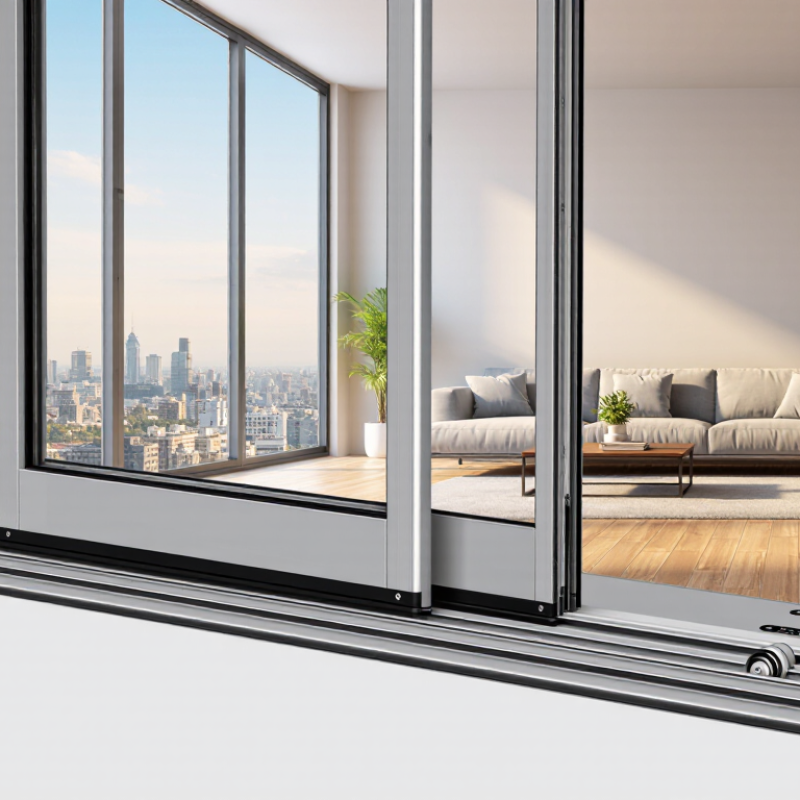
Who Are the Top 10 Sliding Door Manufacturers in China?

How China’s Sliding Door Manufacturing Industry Is Structured

China’s sliding-door industry is not a single factory category. It connects aluminium-profile extrusion, glass processing, hardware supply, assembly, and installation. Some manufacturers control several steps; others focus on fabrication and purchase tracks, rollers, or safety glass from specialist suppliers. This division shapes lead times, customization, and quality checks. A door may look simple. Its performance depends on how those parts work together.

The National Bureau of Statistics’ 2023 real-estate report recorded about 8.39 billion square metres of building floor space under construction, including 5.90 billion square metres of residential space. These figures indicate the scale of China’s building market, but they do not measure sliding-door output. That distinction matters. Buyers comparing manufacturers should ask for profile and glass specifications, hardware load ratings, and documented inspection procedures—not just factory size. Export-focused suppliers may emphasize standardized packing and repeatable dimensions, while domestic project suppliers often handle site-specific openings and finishes. The split is not absolute. A useful industry map still needs better public data separating sliding-door producers from broader door and window manufacturers.

What Makes a Sliding Door Manufacturer a Market Leader

A sliding door manufacturer earns market leadership through consistent performance, not polished catalog photos. Look closely at the frame, rollers, seals, and locking points. Do they move smoothly without rattling? Small details matter. A reliable supplier can explain material choices, finish options, load limits, and suitable applications in plain language. Ask for product drawings, installation guidance, and records of quality checks. These details help buyers compare claims with evidence.

Production capability matters, but so does communication. A capable manufacturer should clarify dimensions, customization limits, packaging, and delivery schedules before an order is placed. Request a sample or inspect a completed installation when possible. Watch the door travel across its track, especially near the closing point. It should feel controlled, not forced. After-sales support also reveals a lot: clear maintenance advice and prompt answers can prevent small issues from becoming costly delays. No ranking is perfect. A large factory may not suit every project, and a persuasive sales pitch is not proof of long-term durability. Look for evidence, then judge it against the building’s actual needs.

Who Are the Ten Leading Sliding Door Manufacturers in China

China’s ten leading sliding door manufacturers are best assessed by production capability, product range, and quality control—not by promotional rankings alone.

Strong candidates typically make systems for homes and commercial spaces, with options for aluminum frames, glass panels, tracks, rollers, and soft-close hardware. Ask whether components are tested together; a smooth panel can still wobble if its track is poorly matched.

Look for clear specifications on frame thickness, glass type, load limits, and corrosion-resistant finishes. Request drawings, sample sections, and installation instructions before comparing quotations. Details matter. A factory’s ability to customize dimensions is useful, but confirm how it handles tolerances and replacement parts.

Check inspection records and sample packaging, too; damaged corners can reveal weak packing practices. One limitation is that public information rarely supports a definitive nationwide top-ten ranking. Buyers should verify factory capacity, references, and after-sales arrangements directly, then compare equivalent door configurations rather than headline prices. A short video of a full-size door running can help, though it cannot replace an in-person inspection.

How Top Manufacturers Differ in Products and Capabilities

Chinese sliding door manufacturers differ less by catalogue size than by what they can reliably build. Some focus on thermally broken aluminum frames and insulated glazing; others specialize in uPVC, timber-clad designs, or wide lift-and-slide panels. Hardware matters, too. Rollers, locks, and track drainage shape how a heavy door feels after years of daily use. Details matter.

The IEA’s 2023 Buildings report says buildings account for about 30% of global final energy use and 26% of energy-related emissions. That makes frame design, seals, and glazing more than cosmetic choices.

Manufacturers with in-house testing can assess air leakage, water penetration, wind resistance, and operating cycles before shipment. Still, a test certificate does not guarantee a good installation. Buyers should compare panel dimensions, glass specifications, hardware load ratings, and after-sales support—not just quoted prices.

A factory may handle large orders well but struggle with unusual openings or precise color matching. That gap is easy to miss in a catalogue. A useful comparison asks for project references and test records for the same door system being quoted.

How to Compare Chinese Manufacturers for Your Project

Comparing Chinese sliding door manufacturers starts with the project, not the catalogue. The 2024 Global Status Report for Buildings and Construction estimates that buildings and construction account for 32% of global energy demand and 34% of energy-related CO₂ emissions. That makes glazing, frame design, and air leakage worth checking, especially in projects with demanding temperature or noise conditions. Ask each supplier for test reports tied to the exact system offered, including glass build-up, frame dimensions, hardware, and installation method. A certificate for a similar product is not the same evidence.

Check performance details. Then check production consistency. Request drawings, material specifications, sample corner joints, and records showing how finished units are inspected. For larger projects, compare lead times, packaging, spare-hardware availability, and the supplier’s process for handling defects.

Ask for test results against relevant air, water, and wind-load standards, and confirm the tested configuration matches your opening size. Small differences matter. A thicker glass panel may change hardware loads, while a wider opening may need a different track design.

I would not choose on price alone; I have seen polished samples hide practical gaps in documentation. That judgment can be imperfect, so verify claims through independent reports, clear contract specifications, and a production sample before approving the order.