
China Top PU Sandwich Panel Manufacturers and Suppliers?

Choosing a Pu Sandwich Panel manufacturer in China is not just a price comparison. Buyers also need to assess insulation performance, steel facings, joint design, production consistency, and delivery support. Small details matter. A poorly sealed joint can undermine an otherwise well-made panel.

The need for careful selection is clear. The United Nations Environment Programme and the Global Alliance for Buildings and Construction reported that buildings and construction accounted for about 32% of global energy demand and 34% of energy-related carbon dioxide emissions in 2023. These figures make building-envelope performance an important consideration, though a panel alone cannot determine a building’s energy use. Climate, installation quality, and the full wall or roof assembly also matter.

This guide introduces Chinese manufacturers and suppliers, while focusing on evidence buyers can check. Look for product data sheets, test reports with named standards, clear core and facing specifications, and documented quality-control procedures. Ask how panels are packed, protected, and handled during shipment. Compare like with like; quoted thickness or insulation values may not tell the whole story. There is no perfect panel. Supplier claims still deserve scrutiny, and published figures should be verified against project requirements. The goal is a practical shortlist, not an unsupported ranking. That distinction is useful when specifications, budgets, and site conditions vary.
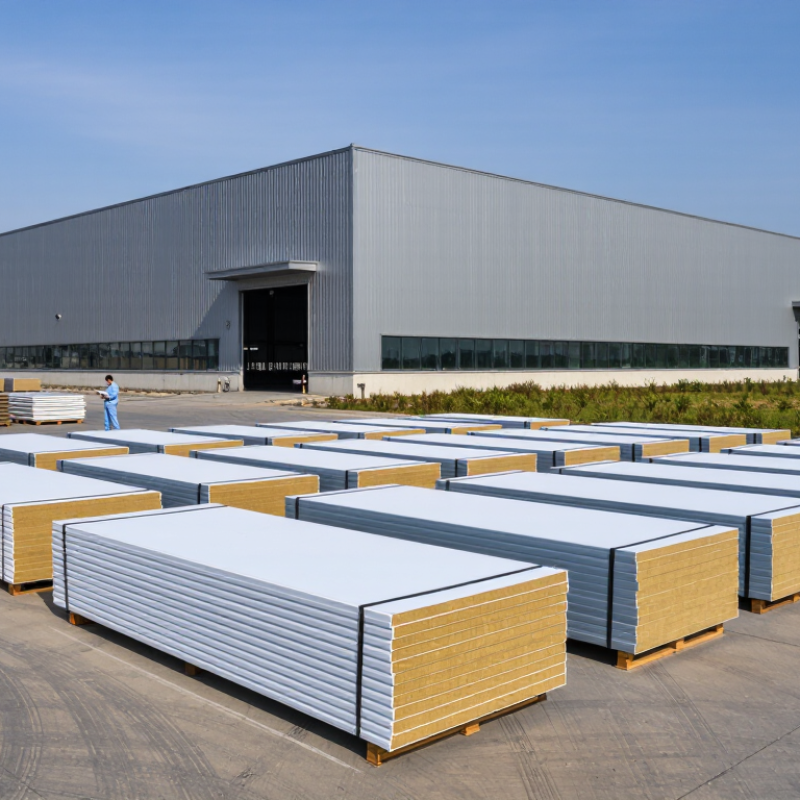
China Top PU Sandwich Panel Manufacturers and Suppliers?

Understanding PU Sandwich Panels and Their Core Components

A PU sandwich panel combines two outer facings with a rigid polyurethane foam core. The facings are often coated steel, though other materials may be specified. They protect the core and help the panel resist bending. The foam slows heat transfer and bonds the faces into one structural unit. Not magic.

Core density, cell structure, and thickness affect thermal and mechanical performance. Joint design matters too: poorly fitted edges can allow heat loss even when the panel itself performs well. The International Energy Agency’s 2023 Global Status Report for Buildings and Construction attributes about 30% of global final energy use and 26% of energy-related emissions to buildings. That context explains why insulation details deserve attention.

The U.S. Department of Energy’s insulation guidance gives a broad range of roughly R-3.8 to R-6.5 per inch for foam-board products; it is not a guaranteed value for every PU panel. Ask for declared thermal conductivity, panel thickness, facing gauge, and test conditions. A useful specification should identify the complete panel, not just the foam. Installation can still undermine good figures. That is easy to overlook.

Understanding PU Sandwich Panels: A typical panel combines two outer facings with an insulating core. PU/PIR cores generally provide lower thermal conductivity than EPS or mineral wool, meaning less heat transfer at the same thickness. Values shown are indicative typical ranges; actual performance varies with product formulation, density, and test method.

How PU Sandwich Panels Are Manufactured in China

China’s PU sandwich panels are commonly made on continuous production lines. Steel coils are unwound, cleaned, and profiled into facing sheets. Operators then guide the sheets into a laminating line, where a measured blend of polyol and isocyanate is spread between them. The foam expands, bonds to both faces, and cures under controlled pressure. It is a precise sequence, but not a flawless one: temperature shifts or uneven chemical mixing can cause weak bonding or inconsistent thickness.

After curing, an automatic saw cuts the panels to order. Staff check dimensions, surface condition, core density, and adhesion; representative samples may also undergo thermal and fire-performance testing. Small errors matter. The 2023 Global Status Report for Buildings and Construction, published by UNEP and GlobalABC, estimates that buildings used 34% of global energy and produced 37% of energy- and process-related CO2 emissions in 2022. That context makes insulation performance important, though a panel’s real performance also depends on joints and installation. Buyers should request current test reports for the exact panel specification, not rely only on catalogue values. A neat surface can hide a weak bond.

Key Applications Across Construction and Industry

China Top PU Sandwich Panel Manufacturers and Suppliers: Key Applications Across Construction and Industry

Polyurethane (PU) sandwich panels combine insulated cores with protective metal facings. In construction, they are used for roofs, exterior walls, partitions, and modular buildings. At a site, their large format can speed enclosure work, but careful joint sealing still matters. A small gap can weaken the thermal performance of an otherwise well-insulated wall.

Industrial uses include refrigerated warehouses, food-processing rooms, logistics facilities, and factory buildings where temperature control is important. The 2023 Global Status Report for Buildings and Construction, published by the UN Environment Programme and GlobalABC, reports that buildings accounted for 34% of global energy demand and 37% of energy- and process-related CO₂ emissions in 2022. Insulated panels can support energy-conscious building design, though they cannot deliver savings on their own. Airtightness, refrigeration equipment, installation quality, and operating practices also count. That is easy to overlook.

Tips: Check the panel’s declared thermal performance, facing material, joint design, and suitability for the site’s moisture and temperature conditions. Ask for test documentation, and inspect sample connections before specifying large quantities. A panel is only as dependable as its details.

How to Evaluate Chinese PU Panel Manufacturers and Suppliers

Evaluating Chinese PU sandwich panel manufacturers starts with evidence, not polished brochures. The IEA reports that buildings account for about 30% of global final energy consumption and 26% of energy-related emissions. These figures make insulation performance a practical purchasing concern. Ask how the supplier measures thermal conductivity and whether results come from an independent laboratory.

Request batch-traceable test reports for core density, panel thickness, bonding strength, and fire performance. For metal-faced panels, check whether testing follows EN 14509, where applicable. Compare declared values with actual sample measurements, including thickness at panel edges. Inspect the production line: uneven foam distribution or weak seams may be visible before shipment. Factory photos help, but they cannot replace inspection. No checklist catches every weakness.

Tips: Ask for recent reports, not undated files. Request a sample cut through the joint, then inspect the foam bond and metal finish. Confirm production capacity, packaging details, and replacement procedures in writing. A supplier may look capable on paper; verify the details.

Comparing Supplier Capabilities, Quality, and Service

Choosing a PU sandwich panel supplier means comparing more than quoted price. Request current test reports, production tolerances, and batch traceability. Check core density, metal-skin thickness, bond strength, and declared thermal conductivity. Ask how these values are verified, not just printed on a brochure. Inspect sample cut edges for voids or uneven bonding; small defects can affect installation.

UNEP’s 2023 Global Status Report for Buildings and Construction estimates that buildings used 34% of global energy in 2022 and generated 37% of energy- and process-related CO₂ emissions. This context makes reliable insulation data important, although it does not prove one panel is best. Compare fire-test documentation and dimensional consistency against project requirements. Also assess service: response times, installation guidance, replacement-part availability, and how complaints are handled. A polished specification is useful, but site handling can reveal gaps that paperwork misses.

Tips: Request test records from the same production line and ask for a sample before ordering. Clarify delivery protection and damage reporting in writing. No comparison is perfect; even careful checks cannot predict every installation issue.

China Top PU Sandwich Panel Manufacturers and Suppliers? – Comparing Supplier Capabilities, Quality, and Service
Comparison Dimension Industry Reference What to Compare Across Suppliers Evidence to Request
Product range Insulated metal panels are available in different core types, profiles, thicknesses, joint designs, and facing materials. Availability varies by factory and product line. Check whether the supplier can provide the panel type, dimensions, surface finish, and accessories required for the project—not just a standard catalogue item. Current technical catalogue, product drawings, available profiles, and a written confirmation of project-specific options.
Core material and thermal performance Polyurethane-family panels may use PUR or PIR cores. Thermal conductivity and calculated panel performance depend on the core formulation, thickness, ageing method, and test conditions. Compare declared thermal conductivity and U-values only when the test method, panel thickness, and calculation basis are the same. Product-specific test reports or declarations identifying the core type, test method, measured value, and applicable panel thickness.
Panel dimensions and tolerances Panel thickness, cover width, length, joint geometry, and dimensional tolerances are product-specific; there is no single dimension set that applies to every supplier. Compare the confirmed production range and tolerances against the approved drawings and installation requirements. Dimensioned drawings, written tolerance schedule, and a pre-production sample or approved mock-up where appropriate.
Metal facings and coatings Facing material, base-metal thickness, coating system, and colour affect durability and suitability. Corrosion performance depends on the environment and the complete coating specification. Compare the specified steel grade, thickness, coating type, finish, and suitability for the project’s exposure conditions. Material and coating specifications, relevant inspection records, and samples matched to the purchase specification.
Fire performance Fire classification is tied to the tested or assessed product assembly and the applicable national or regional method. A core-material claim alone does not establish the fire performance of a complete panel system. Confirm that reports cover the exact panel construction, including core, facings, joints, and thickness, and that the result meets local project requirements. Valid test or classification reports, the standard used, report scope, and confirmation that the supplied configuration matches the tested assembly.
Product standards and quality management EN 14509 covers factory-made, self-supporting double-skin metal-faced insulating panels. ISO 9001 is a quality-management-system standard; it is not, by itself, proof of a particular panel’s performance. Check which standards apply to the destination market and whether certificates and declarations cover the actual product being quoted. Current certificates, product declarations, scope details, and traceable inspection and production records.
Production and inspection control Production methods and inspection procedures differ among factories. Consistent quality should be demonstrated through documented controls and product-specific checks. Compare incoming-material checks, in-process controls, finished-panel inspections, batch identification, and procedures for handling nonconforming products. Quality-control plan, sample inspection report, batch traceability example, and an agreed inspection plan for the order.
Project engineering and customization Requirements such as span, loads, support conditions, joint details, and building-code compliance are project-specific and should be checked by qualified design professionals. Compare the supplier’s ability to provide accurate technical documents and coordinate panel details with the project team. Shop drawings, relevant design data, installation details, and written clarification of design responsibilities.
Packaging and export service Packaging, shipping arrangements, export documentation, and delivery terms depend on the order, destination, and agreed Incoterms. Compare protection against handling and transit damage, document readiness, communication, and clarity of the quoted delivery terms. Packaging specification, packing-list example, export-document checklist, delivery schedule, and written Incoterms quotation.
Warranty and after-sales support Warranty coverage, exclusions, claim procedures, and response times are contractual terms and should not be assumed to be the same across suppliers. Compare the stated warranty scope, response process, availability of replacement parts or panels, and support for installation questions. Written warranty terms, claim procedure, service contact details, and clear identification of covered components and exclusions.

This table is a supplier-evaluation framework, not a verified ranking or a claim about any specific manufacturer. Confirm all specifications, certifications, test results, and commercial terms directly with the supplier for the exact product and destination market.