
Top Custom Animatronics Manufacturers for Global Buyers
Custom Animatronics can turn a story, brand, or public space into a memorable experience. Yet a convincing figure depends on more than appearance. Movement, sound, surface finish, and dependable maintenance all shape its performance. Details matter. Global buyers must also weigh communication across time zones, shipping protection, production schedules, and access to replacement parts. A polished portfolio is useful, but it cannot prove how a supplier handles revisions or repairs. Ask for project references, material specifications, operating guidance, and clear warranty terms before comparing quotations.
This guide introduces leading custom animatronics manufacturers and explains what buyers should examine when assessing them. It considers design capability, engineering resources, customization options, production transparency, and after-sales support. Where available, buyers should review videos of finished figures in motion, not just studio photographs. A small jaw movement or a steady eye line can reveal more than a dramatic pose. Trade-offs remain. A highly detailed build may require more time, budget, and upkeep than a simpler design. There is no universal best supplier; the right choice depends on the project’s setting, audience, operating hours, and service needs. Use the comparisons as a starting point, then confirm current capabilities directly with each manufacturer. That extra check matters.
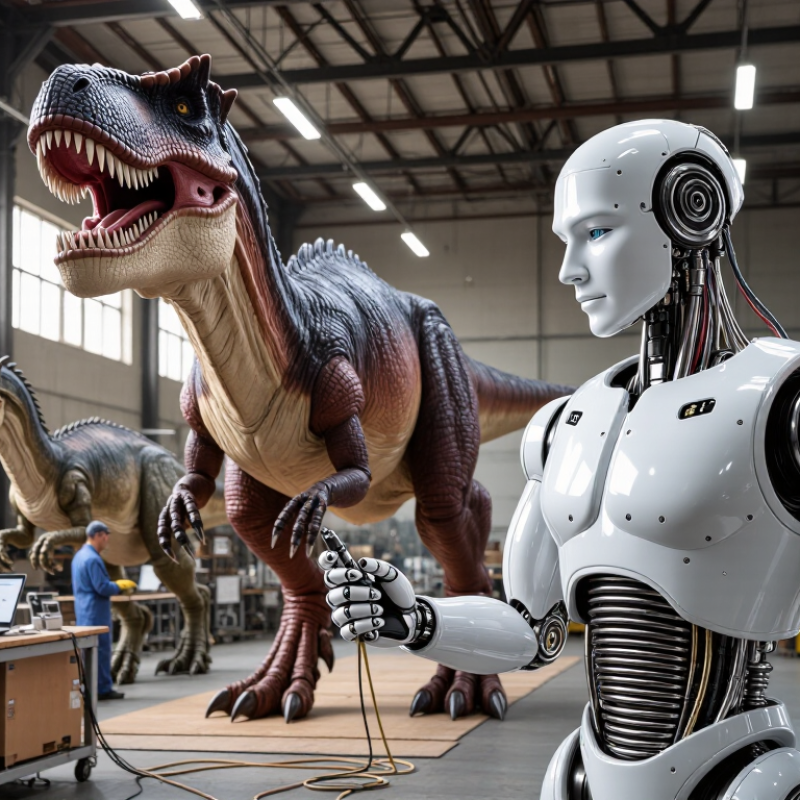
Understanding Custom Animatronics and Their Global Applications
Custom animatronics combine sculpted forms, mechanical movement, control systems, and carefully planned installation. Their purpose is not simply to move, but to make a character or exhibit feel believable in a specific setting. A museum figure may need subtle eye and hand movements, while a large outdoor creature needs weather-resistant finishes and stronger mechanisms. Small details matter. A quiet motor can preserve an intimate scene; a poorly placed cable can distract visitors.
Global applications vary with climate, venue, audience, and maintenance access. Museums often prioritize educational accuracy and dependable daily operation. Attractions may need expressive motion, synchronized lighting, and clear sightlines for crowds. Retail displays typically face tighter space and power limits. These differences shape choices such as actuator type, motion range, surface materials, and control design. There is no universal specification. Even a convincing prototype can behave differently after long operating hours or in a humid environment, so testing under realistic conditions is essential.
A practical brief should describe the character, viewing distance, operating schedule, site conditions, and service access. Ask how technicians can reach moving parts without damaging the finish. Also discuss sound levels, safety stops, and spare components before production begins. Custom work can be impressive, but complexity has a cost: extra movements may increase adjustment needs and downtime. A simpler performance may sometimes feel more natural. That trade-off deserves honest review.
How Custom Animatronics Are Designed, Engineered, and Produced
Custom animatronics begin with a clear performance brief: who the figure is, where it will operate, and what it must do. Designers turn sketches into a movement plan, then engineers select actuators, linkages, sensors, and control systems. A jaw needs a different mechanism from a turning wrist. So does a figure exposed to dust or frequent handling. Early prototypes reveal practical problems, such as cables catching behind a shoulder. Some revisions are unavoidable.
Production combines fabrication, assembly, programming, and repeated testing. The International Federation of Robotics’ World Robotics 2024 report counted about 4.28 million industrial robots operating in factories worldwide in 2023. This is not an animatronics statistic, but it shows how established automation has become in manufacturing. Skilled builders still matter: flexible skin, quiet movement, and believable timing often need careful hand-finishing. A smooth test in the workshop does not guarantee equal performance on a busy exhibit floor.
Tips: Ask manufacturers for movement tests, maintenance access, and a clear parts list. Check how they handle heat, noise, and repeated operating cycles. A slightly slower motion may look more convincing—and last longer.
Top Custom Animatronics Manufacturers for Global Buyers — How Custom Animatronics Are Designed, Engineered, and Produced
Material selection balances strength, weight, appearance, and movement requirements. These representative densities are approximate; exact values vary by alloy, grade, and formulation.
Profiles of Leading Custom Animatronics Manufacturers
Profiles of leading custom animatronics manufacturers are best compared by what they build and how they work. A full-service studio may manage concept design, sculpting, mechanisms, skin, controls, and installation. This can simplify coordination, especially for a large figure with moving eyes and a timed jaw. Ask who handles maintenance after delivery. Details matter.
An engineering-focused manufacturer may excel at compact mechanisms, repeatable motion, and accessible service panels. Its profile should explain materials, operating cycles, and testing methods, not just show polished videos. Look for practical evidence: a jaw tested through repeated movement, wiring labeled inside a shoulder cavity, or a documented repair process. Strong engineering can still feel stiff if movement lacks character.
Scenic fabricators often bring valuable skills in themed environments, finishes, and weather-resistant enclosures. They may need a specialist partner for complex motion systems. Compare portfolios carefully: a convincing still photograph does not prove reliable performance. Request references for projects similar in scale, use, and setting, and discuss spare parts, training, and shipping protection. No profile tells the whole story. Manufacturers may also describe durability differently, so agree on test conditions in writing. A few awkward questions early can prevent expensive surprises later.
Top Custom Animatronics Manufacturers for Global Buyers — Profiles of Leading Custom Animatronics Manufacturers
The profiles below describe common specialist categories in the custom animatronics industry, not individual companies. Capabilities, materials, schedules, and compliance requirements vary by project and supplier.
| Manufacturer Profile | Typical Project Focus | Common Custom Scope | Motion and Control Considerations | Suitable For | Buyer Checks |
|---|---|---|---|---|---|
| Theme-Attraction Fabricator | Immersive attractions, themed environments, and fixed installations | Character figures, scenic integration, mechanisms, and installation coordination | Motion sequences are designed around the scene, operating cycle, access, and maintenance needs | Theme parks, visitor attractions, and entertainment venues | Request installation plans, service-access details, operating assumptions, and project references |
| Creature and Character Specialist | Expressive animal, fantasy, mascot, and character figures | Sculpting, skin and surface finishing, body mechanisms, and character-specific movement | Movement may include coordinated head, jaw, eye, limb, or body actions, depending on the design | Exhibits, themed spaces, events, and branded experiences | Review close-up finish samples, motion demonstrations, cleaning guidance, and repair options |
| Museum and Science-Exhibit Builder | Educational exhibits and interactive interpretation | Interactive figures, explanatory mechanisms, sensors, and exhibit integration | Controls can be configured for visitor interaction, repeatable demonstrations, or timed sequences | Museums, science centers, and educational visitor sites | Confirm accessibility needs, visitor-use assumptions, durability requirements, and content-update process |
| Live-Event and Touring Specialist | Temporary shows, touring productions, and event installations | Portable figures, performance effects, transport-friendly assemblies, and show-control integration | Design must account for operator workflow, setup, teardown, transport, and venue interfaces | Stage productions, touring exhibitions, and special events | Ask about packing dimensions, transport protection, setup time, spares, and on-site support |
| Robotics and Mechatronics Integrator | Mechanism-heavy figures and interactive robotic experiences | Mechanical design, actuation, sensors, control systems, and system commissioning | Motion architecture depends on required movement, duty cycle, control interfaces, and operating environment | Projects with complex movement or integration with other technical systems | Request system diagrams, operating limits, safety documentation, and a defined maintenance plan |
| Refurbishment and Integration Provider | Upgrades, repairs, and integration of existing animatronic installations | Condition assessment, component replacement, control upgrades, and finish restoration | Available work depends on the condition of existing mechanisms, documentation, and interfaces | Operators seeking to extend the service life of existing figures or systems | Arrange an assessment; verify parts availability, compatibility, warranty terms, and scope exclusions |
Procurement note: Compare suppliers using a shared brief covering intended use, environment, movement requirements, finish, controls, installation, maintenance, and acceptance testing. Request project-specific quotations and documentation before making a selection.
Comparing Manufacturers by Expertise, Cost, and Production Capabilities
Top Custom Animatronics Manufacturers for Global Buyers
A capable manufacturer should show more than polished photos. Ask for examples of similar motion systems, such as a turning head, blinking eyes, or moving jaw. Request video of a prototype running through repeated cycles. It can reveal noise, hesitation, and cable strain. Ask who handles mechanical design, electronics, programming, and final assembly. Clear ownership matters when revisions begin.
Compare quotes line by line. A low initial price may exclude control cabinets, spare servos, crating, installation, or commissioning. Check material specifications, testing time, warranty terms, and replacement-part availability. For international projects, confirm export packaging and technical documentation. Production capacity matters too. Ask for a realistic schedule, approval milestones, and a clear method for recording defects. Big promises are easy. Verified processes are harder. Even a careful process cannot guarantee a flawless result, so leave room for adjustments.
Tips: Send each supplier the same brief, including dimensions, movement range, operating hours, venue conditions, and delivery location.
How Global Buyers Evaluate and Select the Right Manufacturer
Global buyers should evaluate a custom animatronics manufacturer against the finished scene, not just a showroom video. Ask how the team turns a concept into a working figure, including movement range, sound cues, operating hours, and installation limits. A useful proposal should list materials, dimensions, power needs, and maintenance access. Check whether the maker can explain those choices in plain language. Small details matter.
Request a sample schedule with design reviews, prototype approval, and shipping milestones. For a large creature, ask to see close-up footage of its joints and surface finish, plus a full movement test. References from comparable projects can reveal how the manufacturer handles revisions and delays. Confirm who will troubleshoot remotely and whether replacement parts can be supplied. Clear answers are a good sign.
Price alone can mislead. A lower quote may omit crating, setup, or after-sales support, so compare like-for-like scopes. The evaluation is not perfectly objective; a convincing demonstration may still hide wear after months of use. Ask what is not included, and record agreed specifications before paying a deposit. Planning can reduce surprises, but it cannot remove every one.