Top 10 PVC Cabinets for Modern Kitchens
A modern kitchen must handle more than attractive photographs. Steam gathers near the kettle, greasy fingerprints mark cabinet doors, and damp cloths meet edges every day. Pvc Cabinets appeal to homeowners seeking smooth finishes and easier routine cleaning. Yet “PVC” describes a surface or panel system, not one uniform product. Core material, edge sealing, hardware, and installation all affect performance.
Industry research helps frame the choices. The National Kitchen & Bath Association’s 2024 Kitchen Trends Report tracks preferences reported by design professionals, while Houzz’s 2024 U.S. Kitchen Trends Study documents decisions made by renovating homeowners. Together, these reports show why cabinet selection belongs in a wider design conversation: color, storage, maintenance, and budget must work as a system. They do not prove that one material suits every kitchen.
That distinction matters. A glossy PVC finish may brighten a compact room, while a matte surface can soften reflections beside a sunny window. Check sample panels under your own lighting. Also inspect hinges, drawer runners, panel thickness, and the maker’s care guidance before comparing prices. Small details count.
This guide presents ten options for modern kitchens, with practical attention to appearance, upkeep, and value. Some claims deserve a closer look. A moisture-resistant finish does not make every cabinet waterproof, and low maintenance does not mean maintenance-free. The best choice is the one whose construction and warranty match your kitchen’s daily use.
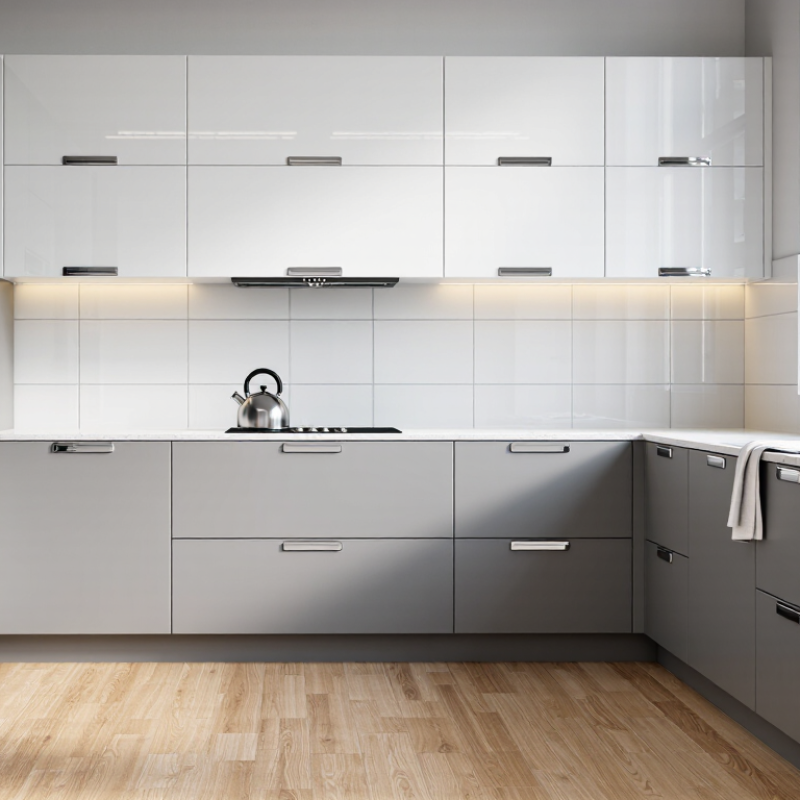
What PVC Cabinets Are and How They Fit Modern Kitchens
PVC cabinets are kitchen cabinets with surfaces or components made from polyvinyl chloride. The term is broad: some doors use PVC film wrapped over a board, while others use solid PVC panels. Ask what the cabinet is made of, not just what its finish is. Construction varies.
In a modern kitchen, PVC’s smooth finish suits flat-front doors and simple lines. It comes in matte, glossy, and wood-look styles, so it can work with pale stone counters, warm lighting, or darker hardware. A damp cloth usually handles everyday splashes. Easy to clean.
Moisture resistance can be useful near sinks, but it does not make every cabinet waterproof. Seams, cut edges, hinges, and the underlying board still matter. Check that edges are sealed and doors feel stable when opened. Heat deserves attention, too: prolonged exposure near an oven or cooktop may affect some PVC finishes. I would compare the exact panel and installation details before choosing; the label alone tells too little. A glossy door can also show fingerprints under bright task lights, a small detail that becomes noticeable during daily use.
Materials, Finishes, and Construction Features of PVC Cabinets
PVC cabinets can use solid PVC boards or PVC film wrapped around engineered wood panels. These are different constructions, even when their surfaces look similar. Solid PVC resists moisture well, while wrapped panels depend on intact edges and adhesive bonds. Check door corners and sink-area joints closely. Tiny gaps matter.
Construction affects how a cabinet performs over time. Look for straight panels, reinforced hinges, and cleanly sealed cut edges. A heavy pot drawer needs sturdy runners, not just an attractive face. Ask how shelves are supported and whether the cabinet back is secured firmly. These details are easy to overlook in a showroom.
Finishes range from smooth gloss to matte textures that soften fingerprints and glare. Light colors can brighten a compact kitchen, though they may show scuffs near handles. Wood-look films add warmth, but their grain pattern can repeat visibly across adjacent doors. PVC is not magic. Heat beside an oven or cooktop can stress films and adhesives, so follow the maker’s spacing guidance and use suitable heat protection. Before choosing, inspect a sample under your kitchen lighting and run a finger along its edges. A small flaw there can become an annoying daily reminder.
How to Evaluate the Top 10 PVC Kitchen Cabinet Options
Comparing the top 10 PVC kitchen cabinet options starts with understanding what “PVC” describes. Some doors use PVC film wrapped around a wood-based core; others use different composite constructions. Ask sellers for the core material, panel thickness, and edge-sealing details. A glossy sample can look flawless under showroom lights. Check it in daylight, too. Look closely at corners and handle cutouts, where peeling or uneven finishing may become visible. Small details matter.
Moisture resistance is useful near sinks, but it does not make every cabinet waterproof. Ask how the doors and cabinet boxes are protected, and follow the care instructions. Wipe a sample with a damp cloth, then check for staining or lifted edges. Also inspect hinges and drawer runners: open and close them several times, and listen for scraping or wobble. Check the heat guidance before placing cabinets beside an oven or cooktop. Compare warranty coverage, installation requirements, and replacement-part availability, not just the quoted price.
Honestly, a neat sample cannot prove long-term durability. I would treat clear specifications and consistent workmanship as stronger evidence than broad claims. The best option depends on your kitchen’s layout, ventilation, and daily use.
Top 10 PVC Cabinets for Modern Kitchens by Style and Function
Top 10 PVC Cabinets for Modern Kitchens
Top 10 PVC Cabinets for Modern Kitchens by Style and Function
A useful PVC cabinet choice should suit daily habits, not just a showroom photograph. Houzz’s 2024 U.S. Kitchen Trends Study found that 79% of renovating homeowners upgraded their cabinets, reflecting how central storage is to kitchen projects.
Consider ten practical styles: flat-panel doors for clean lines; shaker fronts for familiar detail; high-gloss finishes to reflect light; matte surfaces to soften glare; wood-grain PVC for warmth; two-tone sets to define zones; handleless fronts for a streamlined look; glass-front combinations to display dishes; open-shelf combinations for frequently used cups; and modular units for compact layouts. Small kitchens benefit from vertical storage. It can feel crowded, though.
Function depends on construction as much as appearance. Check that edges are sealed, hinges feel stable, and drawers glide smoothly under realistic weight.
PVC surfaces are generally easy to wipe, but heat exposure and poor ventilation can shorten their useful life. Keep doors away from direct heat where possible, and ask the supplier about the panel core, edge treatment, cleaning instructions, and warranty terms. A pale matte finish may hide fingerprints better than glossy black, yet scratches can still show. That trade-off deserves a sample test under your own kitchen lighting.
Installation, Maintenance, and Durability of PVC Cabinets
PVC cabinets suit kitchens where frequent splashes are expected, but they are not waterproof. During installation, level the floor-facing units with shims and fasten them securely to wall studs. Follow the cabinet maker’s specified clearances; tightly forced panels may buckle or leave uneven door gaps. Keep cooking appliances at the stated distance, since heat can soften or distort some PVC components. Small details matter. ASTM D648 measures heat-deflection temperature under load, so ask for the product’s test result rather than assuming all PVC performs alike.
For routine care, use a soft cloth, warm water, and mild detergent. Skip abrasive pads and strong solvents, which can scratch or dull the surface. Check sink edges and pipe cutouts periodically; a small leak can damage adjacent materials even when the cabinet face resists moisture. The U.S. Environmental Protection Agency’s A Brief Guide to Mold, Moisture and Your Home recommends keeping indoor relative humidity ideally between 30% and 50%, and below 60%. Ventilate after boiling or washing. PVC does not need refinishing, but that is not the same as needing no care. There is no single dependable service-life figure for every PVC cabinet: panel thickness, edge sealing, installation, and heat exposure all affect durability. A little wear may still appear sooner than expected.
PVC Cabinets: A Material Property Relevant to Durability
Typical density range for rigid PVC material
Rigid PVC commonly has a density of about 1.30–1.45 g/cm³; actual cabinet boards vary by formulation and construction. Density alone does not determine cabinet durability. For installation, follow the board maker’s fastening guidance and ensure cabinets are level and securely supported. For routine care, wipe with a soft cloth and mild detergent, clean spills promptly, and avoid abrasive cleaners.