
Top 10 Stainless Shower Door Manufacturers for Global Buyers
Choosing a Stainless Shower Door supplier involves more than comparing polished photographs or quoted prices. Global buyers need to assess material quality, fabrication consistency, design options, and support after delivery. A bright, clean finish catches the eye. But it does not tell the whole story. Ask whether the frame uses a clearly specified stainless-steel grade, and check how hinges, handles, seals, and glass are described. These small details can affect installation, maintenance, and the door’s feel in everyday use.
This guide introduces ten manufacturers for buyers evaluating shower door options across different markets. It considers product range, customization, manufacturing capabilities, communication, and the availability of clear technical information. A strong supplier should be able to explain dimensions, finishes, packaging, lead times, and quality checks without relying only on broad promises. Request drawings and sample details where practical, then confirm that the proposed product suits the project and local requirements. A showroom image can look convincing; it cannot replace a careful review of specifications. Even a well-made door may be a poor fit if its hardware, opening direction, or finish does not suit the bathroom. No manufacturer is ideal for every project. Use the profiles as a starting point, verify claims directly, and compare like with like before making a decision.
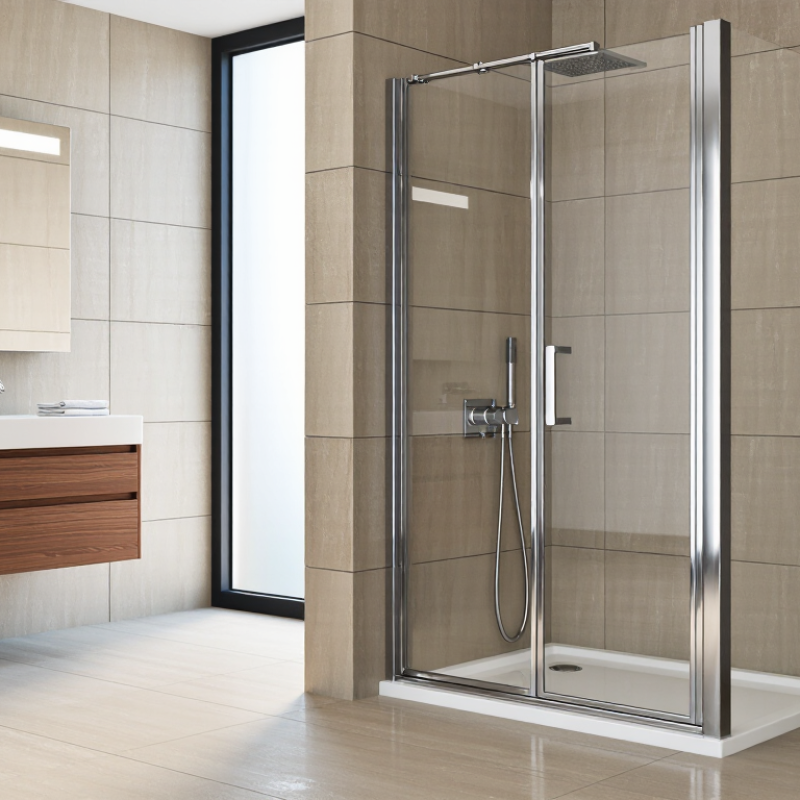
Stainless Shower Doors: Materials, Designs, and Applications
Stainless shower doors combine a metal frame with glass panels, but material choice affects service life. Grade 304 stainless steel suits many indoor bathrooms when cleaned regularly. In coastal or heavily chlorinated settings, grade 316 may offer better corrosion resistance. Neither grade is maintenance-free. Mineral deposits can still mark surfaces, especially around hinges and lower tracks. Wipe these areas dry after use, and check welds and fasteners during routine cleaning.
Design should match the room’s layout. Sliding doors save floor space in compact bathrooms, while hinged doors need clear swing room. Brushed finishes soften fingerprints; polished finishes reflect more light but show water spots readily. Frameless designs create an open feel, though they still need accurately fitted hardware and suitable wall support. Measure the opening at several points, since tiled walls are rarely perfectly square. A small fitting error can leave uneven gaps.
Tips: Ask suppliers to specify the steel grade, glass thickness, and hardware material in writing. Inspect sample corners and hinge movement, not just finish photos. For shared bathrooms, prioritize easy-to-clean edges and replaceable seals. It sounds minor, but seals often decide whether daily use feels effortless. Stainless shower doors work in homes, hotels, and fitness facilities; the right configuration depends on traffic, cleaning routines, and available space.
How to Evaluate Stainless Shower Door Manufacturers
Evaluating a stainless shower door manufacturer starts with the details behind the product photos. Ask what stainless steel grade is used for hinges, handles, and frames, and request material documentation. “Stainless” does not mean stain-proof; finish, cleaning chemicals, and moisture exposure all matter. A useful supplier can explain how components are tested and maintained.
Check how the manufacturer handles real measurements. Request drawings that show wall tolerances, glass thickness, hinge positions, and seal placement. Ask for a sample or close-up photos of welds, cut edges, and finish consistency. Small flaws show up fast. Also confirm how custom orders are inspected, packed, and tracked. A factory visit can help, but it is not always practical; dated production photos and inspection records offer some visibility. No checklist catches everything.
Compare written warranty terms, replacement-part availability, lead times, and export packaging—not just the quoted price. Ask for references from buyers with similar project sizes and installation conditions. A polished sample may not reflect a full production run, so request evidence from recent batches. If answers stay vague, pause and ask again. I would weigh clear communication heavily, though it cannot replace checking the actual hardware and fit.
Top 10 Stainless Shower Door Manufacturers for Global Buyers
A useful “Top 10” list should help global buyers compare stainless shower door manufacturers, not just present polished product photos. Check whether each supplier clearly specifies steel grade, frame thickness, glass compatibility, hinge capacity, and finish options. Ask for drawings with measured opening dimensions. Small details matter: a hinge that suits a heavy glass panel may still fail if its mounting points do not match the wall structure.
Request samples or close-up finish photographs under natural light. Brushed stainless steel can look different across batches, and fingerprints show more readily on some polished surfaces. Ask how the manufacturer checks welds, edge finishing, and corrosion resistance, and whether inspection records are available. A clear answer is useful. A vague promise is not.
For international orders, compare packaging, lead times, replacement-part availability, and communication across time zones. Confirm that the quoted dimensions, hardware, and delivery terms appear in the order documents. This sounds obvious, yet details can get missed. A supplier with a lower price may require costly custom adjustments later. Rankings also have limits: the best fit depends on project volume, installation conditions, and after-sales support. I would leave room for a second review before choosing; one supplier’s sample may not represent its full production run.
Comparing Product Ranges, Certifications, and Customization Options
A useful comparison of stainless shower door manufacturers starts with the range, not the showroom photo. Check whether each supplier offers hinged, sliding, and fixed-panel designs, plus options for different opening widths and glass thicknesses. Ask what stainless steel grades are used for frames, handles, and hinges; 304 is common indoors, while damp or coastal settings may call for a closer look at corrosion resistance. Small details matter. A polished finish can hide uneven edges, so request close-up product images or a sample when practical.
Certifications need context. Verify which organization issued each document, what product or process it covers, and whether it applies to the model being quoted. A quality-management certificate does not, by itself, prove a door’s durability or water performance. Request relevant test reports, installation instructions, and warranty terms in writing. Customization also deserves a practical check: confirm maximum dimensions, glass and finish choices, hardware substitutions, packaging, and lead times. If a supplier accepts unusual measurements, ask how tolerances are controlled and what happens if the site opening differs. I have seen specification sheets that look complete but leave these points vague. That is worth questioning before comparing prices.
Top 10 Stainless Shower Door Manufacturers for Global Buyers - Comparing Product Ranges, Certifications, and Customization Options
Comparison note: This is a category-based guide to ten common supplier profiles, not a verified ranking of named manufacturers. Capabilities and certifications vary by factory, model, destination market, and production batch. Confirm claims with current, product-specific documents before ordering.
| No. | Supplier profile | Typical product range | Relevant standards and documents to verify | Common customization options | Buyer checks |
|---|---|---|---|---|---|
| 1 | Full-range enclosure producer | Framed and semi-frameless hinged, sliding, and pivot shower doors; corner and alcove enclosures. | Ask for glass safety-glazing evidence applicable to the destination market, such as ANSI Z97.1 or U.S. CPSC 16 CFR Part 1201, where required. Request model-specific test reports. | Opening direction, glass thickness, handle style, hardware finish, enclosure dimensions, and packaging. | Check whether quoted dimensions are standard or made to order, and confirm the complete hardware and seal set is included. |
| 2 | Architectural stainless-hardware specialist | Shower doors and enclosures built around stainless-steel hinges, clamps, handles, channels, and support bars. | Verify the stated steel grade and finish specification. For glass, request applicable safety-glazing documents; do not treat a hardware material declaration as glass certification. | Hardware geometry, handle length, finish, hole positions, and coordination with project drawings. | Confirm corrosion-resistance claims, care instructions, load limits, and compatibility of hardware with the specified glass. |
| 3 | Frameless glass enclosure fabricator | Made-to-measure frameless doors, fixed panels, corner entries, and walk-in shower screens. | For markets using European standards, ask whether the glass is tested or declared to EN 12150-1 and whether the enclosure is assessed against EN 14428, as applicable to the product and market. | Panel size, cut-outs, edge treatment, hinge placement, glass appearance, and hardware finish. | Review approved shop drawings, glass tolerances, installation clearances, and responsibility for site measurement. |
| 4 | Sliding-door system producer | Bypass and single-sliding shower doors, rollers, tracks, guides, and matching fixed panels. | Request product-specific safety-glass evidence and operating or durability test details. Check that test documentation covers the offered configuration. | Track length, door overlap, roller design, handle, glass pattern, and available finishes. | Check adjustment range, replacement-roller availability, door-removal method, and cleaning access around the track. |
| 5 | Hinged and pivot-door specialist | Frameless hinged doors, pivot doors, inline panels, and return panels for alcove or corner installations. | Verify safety-glazing compliance for the destination market and request installation instructions showing required hinge support and clearances. | Hinge type and position, door swing, handle, glass thickness, and custom panel widths. | Confirm allowable door size and weight, wall-support requirements, swing clearance, and handedness. |
| 6 | Standard-size, volume-focused producer | Common-size framed or semi-frameless shower doors and enclosure kits for retail, distribution, or development projects. | Request current market-specific declarations, test reports, and traceability information for the exact models and glass supplied. | Carton artwork, private-label packaging, selected finishes, handle options, and limited size variations. | Compare minimum order quantities, carton dimensions, spare-parts support, lead times, and container-loading plans. |
| 7 | OEM/ODM project supplier | Private-label shower doors and enclosures produced to buyer specifications, drawings, or agreed product platforms. | Confirm which entity is responsible for compliance documentation and whether reports identify the exact model, materials, and manufacturing site. ISO 9001 is a quality-management-system standard, not product certification. | Product dimensions, branding, manuals, packaging, hardware selection, and project-specific finishes, subject to tooling and order requirements. | Agree on approved samples, drawing control, change approval, inspection criteria, and ownership of custom tooling. |
| 8 | Custom-project and specification supplier | Project-specific shower screens, oversized panels, unusual layouts, and coordinated enclosure packages. | Request project- and configuration-specific glass and enclosure evidence. Confirm local code requirements with the project designer or authority having jurisdiction. | Non-standard layouts, dimensions, glass options, hardware coordination, and project packaging. | Check site-survey responsibility, engineering review, allowable tolerances, delivery sequencing, and installation support. |
| 9 | Decorative-glass and finish-focused supplier | Clear, patterned, tinted, or other decorative glass options combined with framed or frameless door systems. | Verify safety-glazing evidence for the finished glass type and thickness. Ask whether coatings or decorative treatments affect the test scope or care instructions. | Glass appearance, privacy level, surface treatment, hardware finish, and selected handle designs. | Request physical samples and confirm appearance, maintenance needs, coating durability, and batch-to-batch tolerances. |
| 10 | Regional distributor or assembler | Locally stocked shower doors, assembled enclosure kits, replacement parts, and products sourced from multiple factories. | Ask for the original manufacturer’s current reports and declarations for each model; verify that the documents match the product actually supplied. | Stocked sizes, local packaging, accessory bundles, selected finishes, and region-specific instructions. | Confirm country of origin, warranty provider, local spare-parts stock, after-sales contact, and import or labeling responsibilities. |
Certification reminder: ANSI Z97.1, CPSC 16 CFR Part 1201, EN 12150-1, and EN 14428 address different requirements and are not interchangeable. Applicability depends on product design and sales market. Request valid, traceable documentation for the exact glass and enclosure model being purchased.
Global Sourcing: Pricing, Lead Times, and After-Sales Support
For stainless shower doors, compare landed cost, not just the factory price. Ask for separate line items covering glass thickness, stainless-steel grade, hinges, protective packaging, inspection, and freight. Confirm whether the quote includes installation hardware and replacement parts. Prices can shift when specifications change. Keep the quote’s validity period in writing.
Lead times need the same scrutiny. The World Bank’s 2023 Logistics Performance Index reports an average of 44 days for shipments to travel from origin to destination across measured supply chains. That is a benchmark, not a delivery promise. UNCTAD’s Review of Maritime Transport 2024 also describes disruptions to major shipping routes, which can affect schedules and freight costs. Ask manufacturers to separate production time from port handling and transit time. Allow a buffer. A tidy spreadsheet can still miss a delayed container or damaged glass crate, so check how claims and replacement shipments are handled.
Before ordering, request a dated production schedule, packing photos, inspection records, and a written after-sales process. Clarify response times, spare-hardware availability, and who pays for replacement freight when a verified defect occurs. Small details matter. A buyer may save on the unit price, then lose time waiting for one missing hinge. I would compare support terms alongside price, even when they seem less urgent.