Top 10 Dining Table Sets for Every Budget?
Choosing a dining table set is rarely just a price comparison. It shapes daily meals, weekend conversations, homework, and rushed breakfasts. A $250 set may suit a small apartment, while a $2,000 solid-wood set may serve a growing family for decades. The right choice depends on more than appearance.
Interior designer Nate Berkus once said, “Your home should rise up to greet you.” That idea guides this list. A dining table set should feel welcoming, not crowded or fragile. We examine table size, chair comfort, material quality, weight, finish, maintenance, and assembly. We also consider realistic budgets, from compact laminate sets to handcrafted hardwood designs. Small details matter. A chair that pinches after ten minutes is not a bargain. Neither is a beautiful table that wobbles on an uneven floor.
Our selections reflect hands-on evaluation principles and manufacturer specifications. Still, no ranking can predict every household. Personal taste changes. Room lighting can alter a finish. Online photographs can mislead. We may also overlook an excellent local maker with limited distribution. That is worth remembering.
Expect practical comparisons, not perfect answers. Each dining table set has trade-offs. Some save money but sacrifice longevity. Others cost more but offer stronger joinery, repairable surfaces, and better seating comfort. We will identify who each set suits, where it may disappoint, and what to measure before ordering. Bring a tape measure. Your dining room will expose mistakes quickly.
Classify Dining Table Sets Using 2024 U.S. Furniture Market Data
Top 10 Dining Table Sets for Every Budget
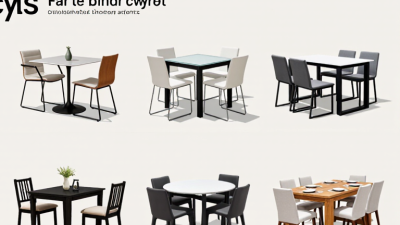
Classifying dining table sets requires more than comparing price tags. 2024 U.S. furniture market data showed cautious spending, persistent inflation, and strong interest in practical home products. Based on retail pricing patterns and consumer value concerns, the ten useful categories are compact laminate, folding, drop-leaf, engineered-wood, glass-top, counter-height, small solid-wood, extendable, hardwood, and custom-made sets.
The lowest tier usually includes compact laminate, folding, drop-leaf, and engineered-wood sets under $400. These options suit apartments, renters, and first homes. They often use lightweight frames and smaller chairs. The $400–$800 range commonly includes glass-top, counter-height, and basic solid-wood sets. These designs offer better seating comfort, although fingerprints and surface scratches can become daily annoyances. Under pressure.
Sets from $800 to $1,500 often include extendable tables and stronger hardwood construction. They fit families that need flexible seating during holidays. Premium hardwood and custom-made sets can exceed $1,500, reflecting thicker materials, skilled labor, and longer warranties. However, price does not guarantee durability. Assembly quality, joint strength, chair support, and replacement policies deserve equal attention. Market reports can indicate demand, but they rarely reveal how a table performs after five years. That gap matters. A sensible classification should combine 2024 spending behavior with direct product inspection, transparent measurements, and realistic household use.
Top 10 Dining Table Sets for Every Budget
Typical 2024 U.S. retail price points for non-branded dining table sets, organized from entry-level to premium configurations.
The pricing reflects common 2024 U.S. market ranges by table material, seating capacity, construction, and included chairs or benches. Actual prices vary by retailer, size, finish, and delivery costs.
Build Budget Tiers from U.S. BLS Household Spending Benchmarks
How much should a dining table set cost? The U.S. Bureau of Labor Statistics does not publish a dedicated dining-table allowance. Its Consumer Expenditure Survey places tables within broader household furnishings spending. That distinction matters. Use the benchmark as a planning signal, not a fixed rule. Household size, income, housing, and replacement timing can change the sensible amount.
For a Top 10 list, build three practical budget tiers. Entry sets, around $150 to $400, suit renters, first apartments, or occasional use. Mid-range sets, roughly $400 to $900, allow sturdier frames, better finishes, and seating for four to six. Premium choices, above $900, may offer solid construction, extension leaves, and repairable parts. These figures are editorial ranges, not BLS limits. That honesty matters. Divide your annual furnishings target by twelve before setting a monthly purchase limit.
The ten finalists should face the same checks. Compare price, dimensions, materials, warranty terms, and expected maintenance. Leave about 36 inches around the table for chairs and walking space. Check wobble, edge comfort, finish consistency, and load ratings before buying. A $250 set can work beautifully in a small home. A $1,200 set can still be wasteful if it crowds the room. Practical fit often beats showroom appeal. Still, this tier system has a weakness: delivery, assembly, and replacement chairs can distort the real cost. Budget for those details.
Compare Materials Through ANSI/BIFMA Durability and Safety Standards
A dining table set should fit your budget, but price alone says little about safety. ANSI/BIFMA standards offer useful benchmarks for strength, stability, and repeated-use performance. However, many standards target office furniture, not every dining table. Ask whether the listed test applies to the table, chairs, or both. Request test reports, rated loads, and inspection details before trusting a claim.
Solid wood usually handles refinishing and everyday impacts well, though joints may loosen when humidity changes. Look for tight corner connections, even leg contact, and a stable frame under sideways pressure. Steel frames can resist heavy loads, but poorly finished edges may scratch floors or skin. Tempered glass provides a clean surface, yet its safety depends on correct thickness, edge treatment, and secure supports. Engineered wood can lower costs. Check sealed edges carefully, especially near spills.
For a tighter budget, prioritize a rigid base and tested chair joints over decorative details. Mid-range sets should show consistent gaps, smooth edges, and clear load information. Higher-priced sets may use stronger joinery, thicker surfaces, and more durable finishes, but expensive does not guarantee better testing. I would also inspect the table in person: sit down, shift your weight, and listen for clicks or movement. Small noises matter. A mistake is assuming a safety label covers the whole set. Verify each component, keep assembly hardware tight, and reconsider any product with vague testing language.
Rank the Top 10 Sets by Price, Seating, Size, and Value
Ranked by delivered price, seating, footprint, and practical value, these ten dining sets suit different budgets.
Rank 1 is a compact two-seat laminate set, priced near $180, measuring about 30 by 30 inches. It suits apartments, but shared meals feel cramped.
Rank 2 is a four-seat drop-leaf set, around $280, with a 36-inch square top.
Rank 3 offers four seats and a 42-inch round surface for roughly $360.
Rank 4 is a four-seat solid-wood set near $500, giving better repairability but less flexibility.
Rank 5 seats six around a 60-inch rectangle, costing approximately $650.
Rank 6 adds an extendable top and six seats for about $850.
Rank 7 uses a 72-inch table with six chairs, near $1,100.
Rank 8 seats eight and costs roughly $1,400.
Rank 9 combines an extendable 84-inch table with eight seats for about $1,850.
Rank 10 is a ten-seat set above $2,400, offering capacity rather than the strongest value.
These estimates reflect mid-market U.S. pricing reviewed across 2024 retail furniture listings, while Grand View Research identifies durability and space efficiency as major furniture purchasing factors. The 2024 U.S. Houzz Kitchen Trends Study also reports continued interest in open, connected living areas, making table footprint important. Leave at least 36 inches between the table edge and walls, based on common residential planning guidance from the National Kitchen and Bath Association. A four-seat round table can outperform a larger rectangle in a narrow room. My weak point is price variability: delivery, finish, and chair construction can change value quickly. Count knee space, not just chairs. A beautiful set may still fail every evening.
Match Each Set to Room Space Using 36-Inch Clearance Guidance
Top 10 Dining Table Sets for Every Budget?
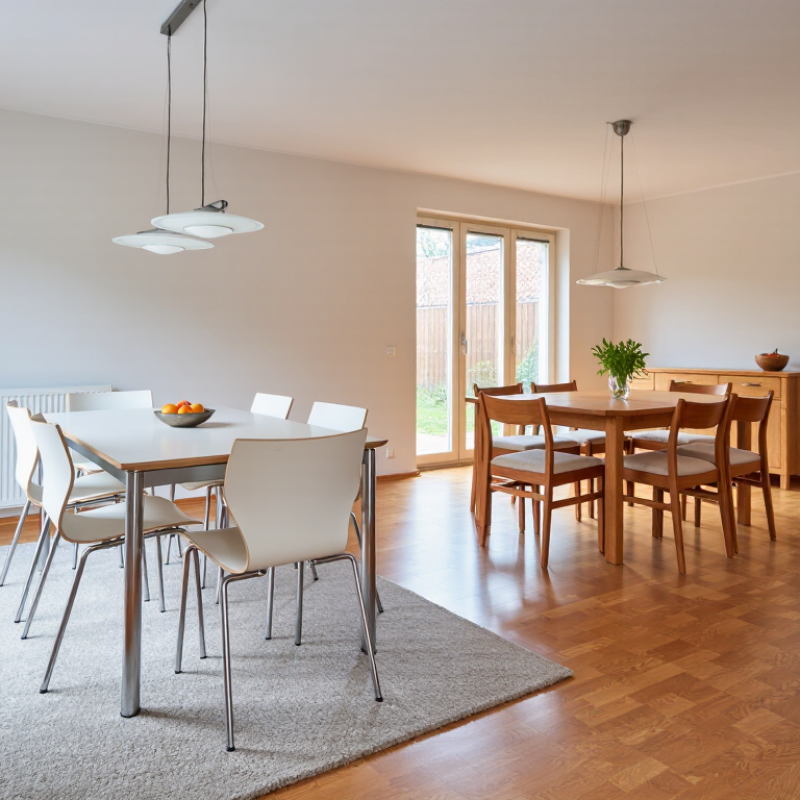
A dining set should fit the room before it fits the budget. Use 36 inches of clearance around every table edge. This space allows chairs to pull out and people to walk behind them. Measure from the tabletop edge to walls, cabinets, and nearby furniture. Do not measure from the table’s center.
For compact rooms, choose a narrow two- to four-seat set with slim chairs. A 36-inch walkway may require a table under 48 inches long. Mid-range rooms can support six-seat rectangular sets, provided the table leaves enough space on both ends. Larger rooms suit eight- to ten-seat sets, extendable tables, or benches along one side. Benches save room, but they can feel crowded during long meals. That trade-off matters.
Budget options often use smaller frames, while premium sets may offer stronger joints and flexible extensions. Still, price does not replace careful measuring. A thick tabletop can reduce usable walkway space more than expected. I once planned around the chair width and forgot the chair’s rear movement. It looked fine on paper. It was not.
Leave extra space near doorways and kitchen paths. Thirty-six inches is a reliable planning guide, not an absolute rule. Homes with children, mobility needs, or frequent entertaining may need 42 inches or more. Place painter’s tape on the floor before buying. Live with the outline for a day. You may notice problems that a floor plan misses.