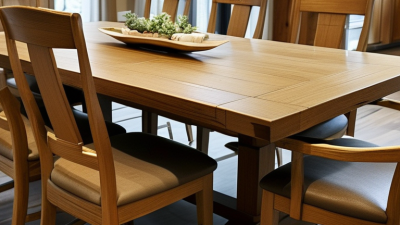
China Top Dining Room Table Manufacturers and Suppliers
A dining room table is more than a surface for meals. It must balance stability, finish quality, usable space, and daily wear. For buyers comparing China’s manufacturers and suppliers, those details matter as much as price. A table that looks elegant in a showroom may wobble on an uneven floor or scratch under ordinary use. Small checks count.
Industry figures offer useful context, but they need careful interpretation. Fortune Business Insights estimated the global furniture market at US$647.19 billion in 2023. Its report covers furniture broadly, not dining tables alone. In China, industry data cited by the China National Furniture Association put 2023 revenue for furniture manufacturers above designated size at about RMB 655.7 billion, down 4.4% year on year. These figures suggest a large, active supply base, not that every factory offers the same consistency. A market report cannot inspect a tabletop’s edge banding.
This guide looks at manufacturers and suppliers through practical sourcing questions: materials, construction, customization, quality checks, lead times, and communication. Ask for close-up photos of joints and finishes, material specifications, and a sample when possible. Confirm how dimensions are measured, especially tabletop thickness and leg clearance. Still, samples may not represent every production run. That is worth remembering. Reliable decisions combine published data with direct verification, clear specifications, and realistic expectations.
Overview of China’s Dining Room Table Manufacturing Industry
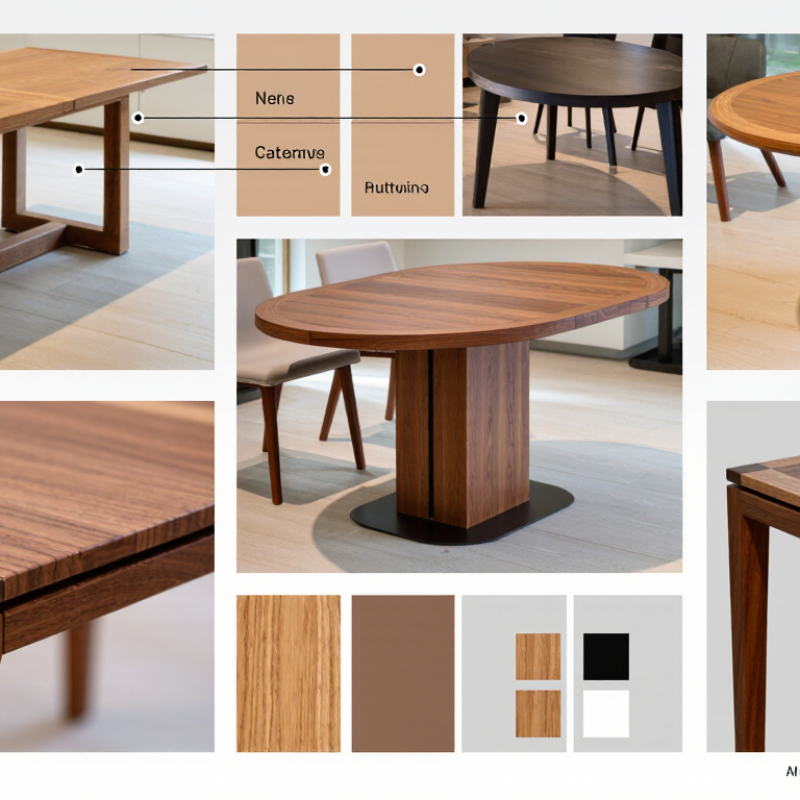
China’s dining room table manufacturing industry brings together woodworking, metal fabrication, surface finishing, and furniture assembly. Production ranges from compact tables for apartments to large extendable designs for family dining. Many manufacturers offer choices in dimensions, finishes, leg styles, and materials, while standard models help keep production more consistent.
Materials commonly include solid wood, engineered wood, metal, glass, and combinations of these. Each choice affects weight, upkeep, durability, and shipping needs. A workshop may cut panels with automated equipment, then sand, finish, and inspect them by hand. Small details matter: an uneven joint or rough table edge can be noticeable in everyday use. Finish samples are useful, but they may look different under warm indoor lighting.
The industry benefits from broad supplier networks and the ability to handle both large orders and customized specifications. Capabilities vary, though. A polished catalogue does not prove that every production batch will match the sample, so buyers often review material descriptions, construction details, packaging, and inspection procedures. Even careful checks have limits. Wood grain and color can vary, and timelines may shift when components or finishes need adjustment. Understanding these practical trade-offs gives a clearer view of how China’s dining table sector operates.
Common Dining Table Designs, Materials, and Construction Methods
Dining tables come in several familiar shapes, each suited to different rooms. Rectangular designs fit narrow spaces and seat larger groups. Round tables make conversation easier, though their center pedestal can limit legroom. Extendable models use leaves that slide or lock into place. Check the mechanism in person; a stiff joint can become frustrating during regular use. Small details matter.
Material affects weight, maintenance, and appearance. Solid wood shows natural grain, but seasonal humidity can cause slight movement. Veneered engineered panels offer a more consistent surface, while steel bases can provide a slim, stable support. Stone tops feel substantial, yet they need careful handling and a suitable frame. Construction deserves equal attention. Aprons and crossbars help reduce wobble, while well-fitted dowels, bolts, or traditional joinery hold components together. Look beneath the tabletop for clean connections and even gaps. A flawless finish is not the whole story. Some tables look sturdy but flex when pressure is applied near an edge, so checking stability before purchase is worthwhile.
How Chinese Manufacturers Ensure Product Quality and Safety
China’s dining-table manufacturers protect quality through controls that begin before assembly. Incoming timber and panels are checked for moisture, thickness, delamination, and visible defects. On the factory floor, inspectors verify joint fit, screw torque, edge sealing, and tabletop flatness. Small details matter: a poorly sealed edge can absorb water, while a loose apron joint may wobble after repeated use.
Mechanical testing adds measurable checks. CEN’s EN 12521 standard sets safety, strength, and durability requirements for domestic tables; manufacturers can use its test methods to assess loads and repeated-use performance. For composite-wood tables, emissions also deserve attention. The World Health Organization’s 2010 indoor-air guidelines set a formaldehyde guideline of 0.1 mg/m³ over 30 minutes. This is an indoor-air benchmark, not a universal furniture pass limit. Responsible suppliers therefore document panel sources, test results, and batch inspections, and confirm requirements for the destination market. Paperwork helps. It is not perfect. A sample test cannot reveal every production variation, so factories should retain inspection records and recheck products when materials or processes change.
Formaldehyde Emission Limits for Wood-Based Panels Used in Dining Tables
China’s GB/T 39600-2021 classifies wood-based panels by formaldehyde emission limits. Manufacturers can support product safety by sourcing compliant panels and verifying material test reports. These limits apply to panels, not to a complete dining table.
Source: GB/T 39600-2021. Emission limits are shown in mg/m³.
Key Factors for Evaluating Dining Table Suppliers in China
China Top Dining Room Table Manufacturers and Suppliers
Key Factors for Evaluating Dining Table Suppliers in China
A dependable dining table supplier should explain materials, construction, and production controls clearly. Ask whether the tabletop is solid wood, veneer, or another material, and request its thickness and finish details. Inspect a sample for smooth edges, stable legs, and an even surface. Small flaws matter. They can become obvious under dining-room lighting. Also ask how the supplier checks dimensions and table stability before packing.
Tips: Request a written specification sheet and a sample from the intended production process. Confirm the wood or panel type, finish, hardware, packaging, and inspection steps. Ask for recent production photos or inspection records. A beautiful sample alone is not enough.
Compare suppliers on communication, realistic lead times, order flexibility, and their handling of defects. Give them the same questions and compare the detail of each reply. Check whether they can explain how tables are protected against scratches and corner damage during shipping. Clarify what happens if delivered goods differ from the approved sample. No checklist catches everything. Some details may still be unclear, so record open questions and resolve them before placing an order. A careful evaluation takes time, but rushed decisions often leave buyers with costly surprises.
China Top Dining Room Table Manufacturers and Suppliers - Key Factors for Evaluating Dining Table Suppliers in China
Suggested buyer-side evaluation framework. The weightings are a customizable scoring model, not market statistics or ratings of individual suppliers.
| Evaluation Factor | Suggested Weight | What to Check | Useful Evidence to Request | Potential Warning Signs |
|---|---|---|---|---|
| Product Quality and Construction | 20% | Inspect tabletop flatness, edge finishing, joints, leg stability, surface consistency, and hardware fit. Confirm that samples match the approved specifications. | Production samples, inspection records, written specifications, and a documented process for handling defects or rework. | Unapproved material or construction substitutions; inconsistent samples; vague acceptance criteria. |
| Materials and Product Compliance | 15% | Identify the exact wood, veneer, metal, stone, glass, finish, and composite-board materials used. Check requirements for the destination market and product category. | Material specifications, supplier declarations, and applicable test reports. For example, FSC chain-of-custody documentation may help verify eligible certified wood claims; US-bound composite wood products may be subject to TSCA Title VI requirements. | Unsupported sustainability or compliance claims; test documents that do not identify the relevant product, material, or test scope. |
| Manufacturing Capability | 15% | Assess whether the production setup can make the required table sizes, shapes, finishes, and construction types consistently. | Facility and process information, machinery list, sample workflow, production inspection checkpoints, and a clear account of any outsourced processes. | Unclear responsibility for outsourced work; inability to explain how specifications are controlled between production steps. |
| Customization and Design Support | 10% | Confirm capabilities for custom dimensions, finishes, materials, packaging, drawings, and prototype revisions. | Dimensioned drawings, finish or material samples, prototype approval records, and written confirmation of tolerances and change control. | Changes accepted only verbally; no clear method for approving samples or revised specifications. |
| Production Capacity and Lead-Time Control | 10% | Check whether the supplier can meet the order quantity and requested schedule, including sampling, production, inspection, and dispatch stages. | Order-specific production schedule, stated capacity assumptions, milestone updates, and a process for notifying buyers of delays. | Guaranteed delivery dates without a production plan; capacity claims that cannot be explained or documented. |
| Pricing and Commercial Terms | 10% | Compare quotations on the same product specifications, order quantity, packaging, delivery term, payment schedule, and included services. | Itemized quotation, clearly defined Incoterms® rule and named place, payment terms, quotation validity, and written terms for changes or defects. | Unspecified inclusions or exclusions; price changes after specification approval; unclear payment or claims terms. |
| Packaging and Transport Readiness | 5% | Review protection for tabletops, edges, finishes, legs, and hardware, as well as carton size, handling marks, and shipment configuration. | Packaging drawings or photographs, packing list format, and evidence from a trial shipment or packaging assessment where available. | Packaging not designed for the product’s weight or fragility; no defined method for protecting finished surfaces. |
| Communication and Documentation | 5% | Evaluate response clarity, specification tracking, document accuracy, and the ability to resolve questions throughout the order. | Written responses to a technical inquiry, version-controlled specifications, and sample commercial and shipping documents with sensitive information removed. | Conflicting answers from different contacts; missing or inconsistent product and order details. |
| Business and Export Readiness | 10% | Verify the contracting entity, payment beneficiary, order responsibilities, and experience with the documentation and destination-market requirements relevant to the transaction. | Business registration information, a contract or purchase-order process, export-document examples where applicable, and references that can be checked with permission. | Unexplained differences between the contracting party and payment beneficiary; refusal to clarify contractual responsibilities. |
| Total Suggested Weight | 100% | Adjust the weights to reflect product complexity, order size, destination-market requirements, and the buyer’s priorities. | ||
Practical use: score each factor consistently, verify key claims with documents or samples, and confirm all approved specifications and commercial terms in writing before placing an order.
Sourcing, Customization, and Export Considerations for Buyers
China Top Dining Room Table Manufacturers and Suppliers
Buyers should compare factories by construction details, not catalog photos alone. Request drawings that specify tabletop thickness, edge profile, leg material, finish, and dimensional tolerances. For a custom order, approve a physical sample under the same lighting used for color inspection. A small stain variation can look obvious across a long tabletop. Details matter. Confirm carton dimensions, corner protection, moisture barriers, and assembly instructions before production. Ask for inspection records and a written defect standard; vague quality promises are hard to enforce. A sample can still mislead if mass production uses different timber or finishing steps.
Export planning deserves equal attention. The World Bank’s 2023 Logistics Performance Index ranked China 19th among 139 economies, but that national result cannot predict one supplier’s shipment performance. Ask for recent export references, production lead times, port options, and a clear shipping quotation. Confirm who handles customs documents, insurance, and destination charges under the agreed Incoterms. Measure twice. Check the packed table’s volume against container plans, since bulky tops can raise freight costs quickly. Request packaging photos from a trial shipment. Suppliers may have strong customization skills, yet communication gaps over color, hardware, or packing can still cause costly rework. Build approval checkpoints into the schedule, and keep every specification in writing.
Related Posts
-
How to Choose the Right Home Dining Table?
-
How to Choose the Right Dining Table for Your Space?
-
Top 10 Home Decor Dining Table Sets for Every Budget
-
How to Choose the Right Furniture Dining Table Set?
-
How to Choose a Home Decor Dining Table Set?
-
5 Essential Tips for Choosing the Perfect Dining Table Furniture